Challenge
The City of Ames, Iowa, operated its traffic signal network without fiber optic communications, limiting its ability to manage signals centrally, collect reliable systemwide data, and modernize hardware and software consistently. The City needed a partner to develop a phased, fundable plan to evaluate and upgrade core signal infrastructure—controllers and cabinets, multimodal detection, video monitoring, central management software and hardware—and to establish an overall traffic data management strategy. A key requirement was planning and deploying a city-wide fiber optic communications backbone to connect intersections and support future Intelligent Transportation System (ITS) expansion.
Solution
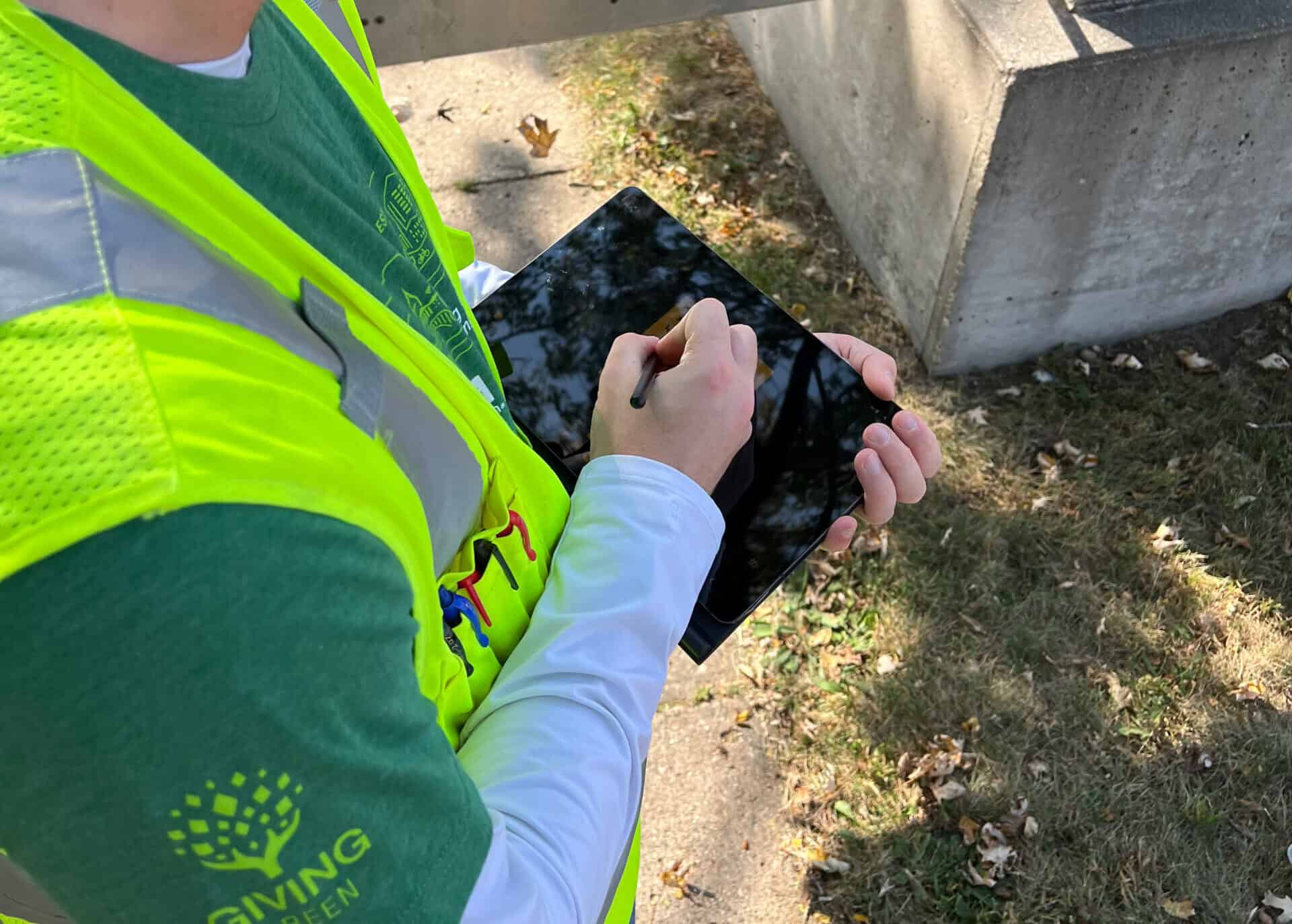
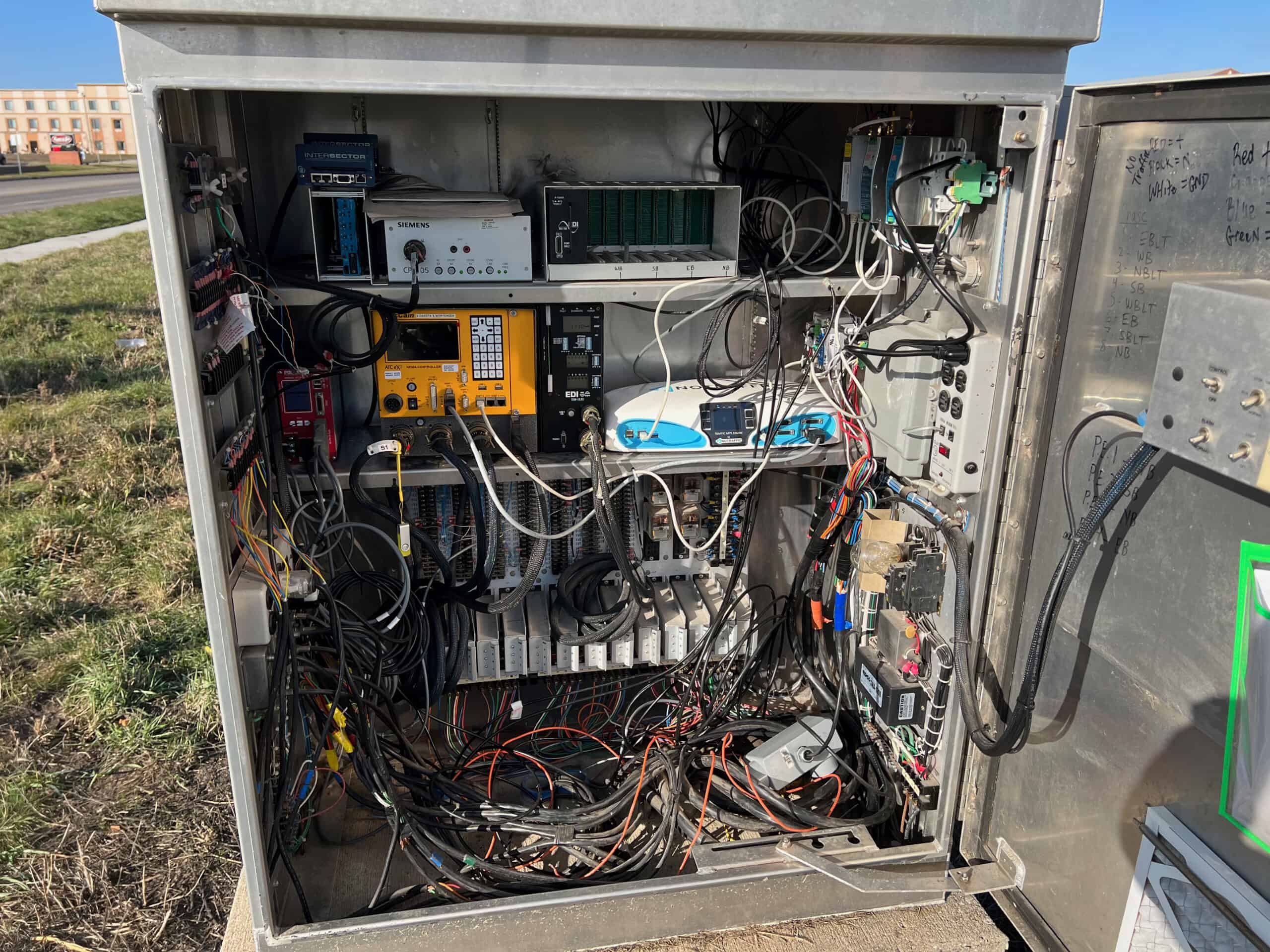
HR Green partnered with communications firm gbaSI to develop a comprehensive ITS Traffic Signal Master Plan and advance the City through implementation. The effort began with a detailed field inventory and evaluation of existing traffic signal and communications infrastructure to determine what could be retained and what required replacement. The team opened and documented more than 92 traffic signal cabinets, recording controller type, cabinet type, vehicle detection type, communications equipment, uninterruptible power supplies (UPS), emergency vehicle preemption sensors, and other traffic sensing devices.
Using this cabinet-level baseline, the team prepared a Needs Assessment and a High-Level Alternatives Evaluation to define system requirements and performance expectations from a stakeholder perspective. Those deliverables informed a Strategic Deployment Plan detailing phased deployment of the recommended traffic signal management system, communications system, and supporting ITS field devices and technologies. The master plan provided a full deployment schedule, with a focused six-year phasing plan and associated cost estimates. With Iowa Clean Air Attainment Program (ICAAP) funding through the Iowa Department of Transportation, the City moved from planning into delivery.
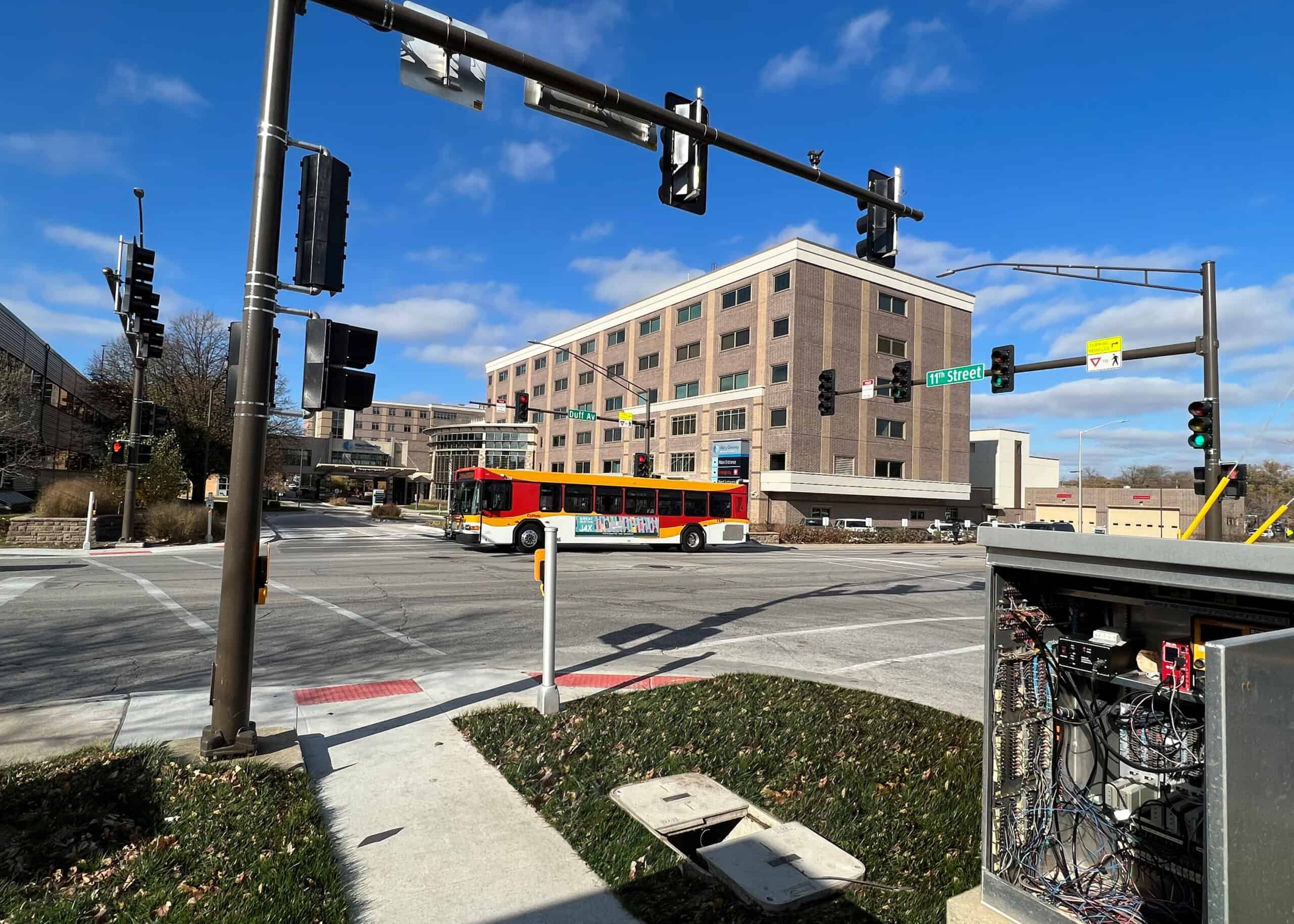
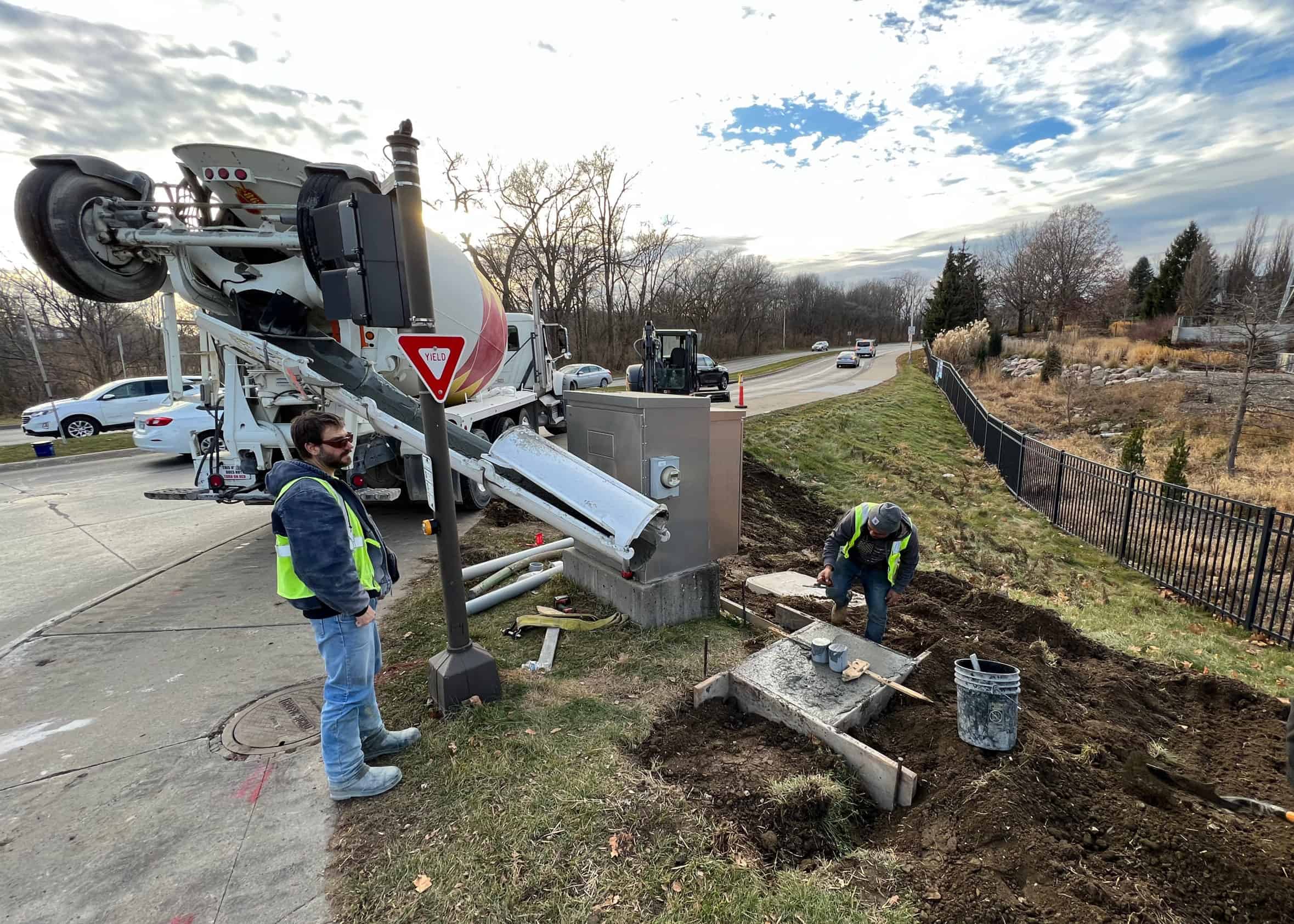
Implementation Phases: Phases 1 through 3 have been delivered, including evaluation of Advanced Traffic Management Software (ATMS) and PS&E development for the signal and communications upgrades. Design and construction activities across the program have included fieldwork at project intersections and development of plans to replace traffic signal controllers, install UPS systems, add traffic monitoring cameras, replace vehicle detection systems, and install ethernet switches at signal cabinets. To connect the system, the program installed conduit and fiber optic cable and handholes, with coordination across multiple City departments, utility companies, and the Iowa Department of Transportation.
Phase 4: The team assisted the City in further evaluation of ATMS and advanced through the stages of PS&E package development with the Phase 4 plan set package being most recently let to the contracting community for construction. PS&E package preparation has included fieldwork at 56 intersections through the Phase 4 package, covering the design and replacement of traffic signal controllers, installation of uninterruptible power supply systems, installation of traffic monitoring cameras, replacement of vehicle detection systems, and installation of ethernet switches at all project intersections. To connect the traffic signal cabinets, over 19 miles of conduit and fiber optic cable and over 125 handholes will have been installed. The project included coordination with multiple City departments, utility companies, and the Iowa Department of Transportation.
Benefit
With the master plan and phased delivery now advancing through Phase 4, Ames has transitioned from isolated, non-fiber-connected intersections to an increasingly connected, centrally managed traffic signal system. The program’s combination of cabinet-level field verification, stakeholder-defined requirements, and phased implementation has improved operational visibility and created a scalable foundation for modern signal operations—supporting upgraded controllers, reliable communications, enhanced detection, and real-time monitoring as the City continues to expand the system.