

Challenge
The Woods Creek watershed has been heavily impacted by decades of agricultural and suburban development, which altered the creek’s natural form and function. In Reach 6–7, the stream had become highly degraded, exhibiting active bank erosion, invasive vegetation, unstable flow regimes, disconnected floodplain function, and diminished water quality. These conditions contributed to downstream sedimentation, localized flooding, and continued impairment concerns for Woods Creek and Woods Creek Lake. The Village of Algonquin needed a restoration approach that could stabilize the channel, improve habitat and water quality, and increase floodplain performance while staying compliant within a federally regulated Waters of the United States, adjacent wetlands, and a Zone AE floodplain.
Solution
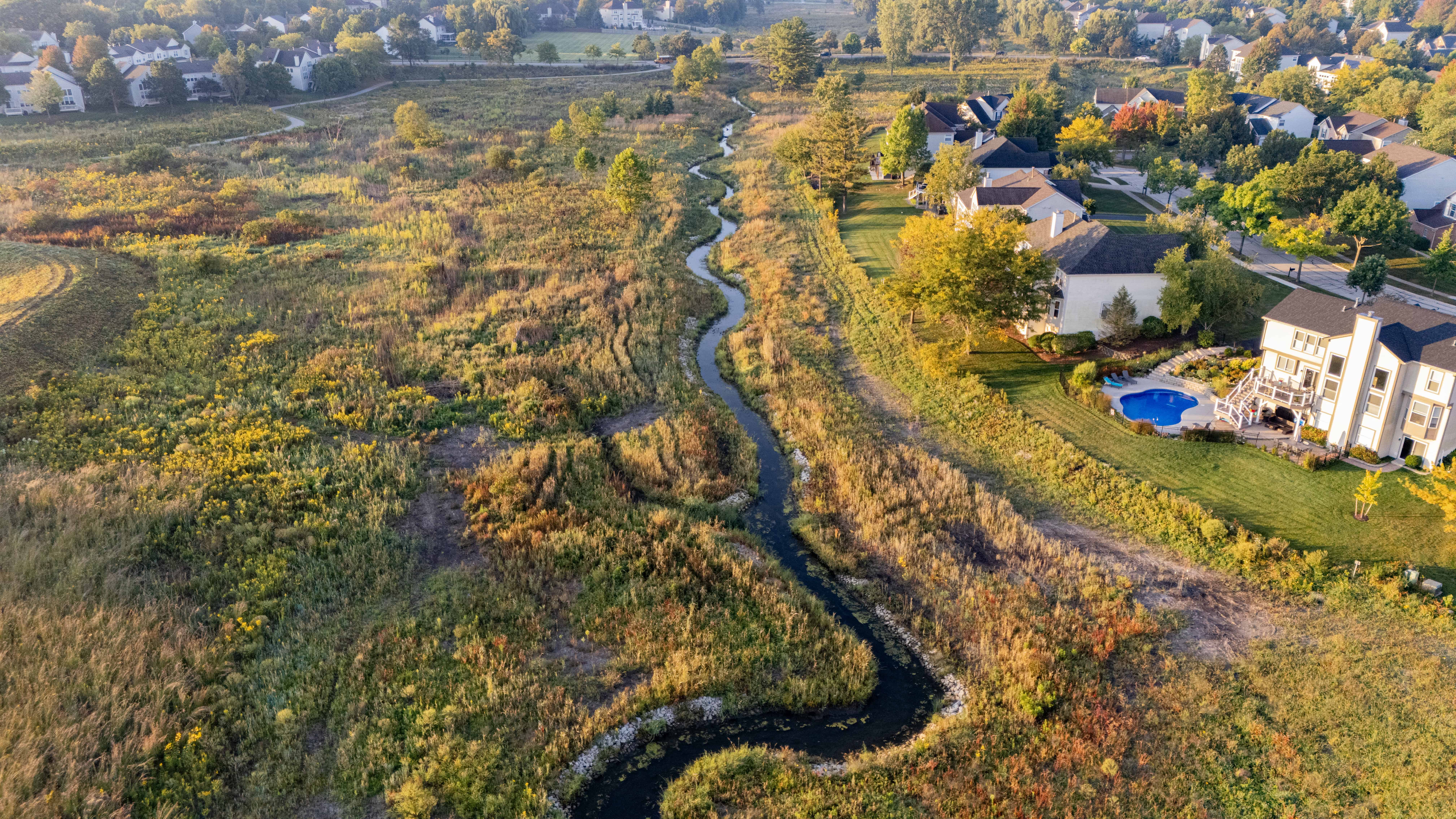
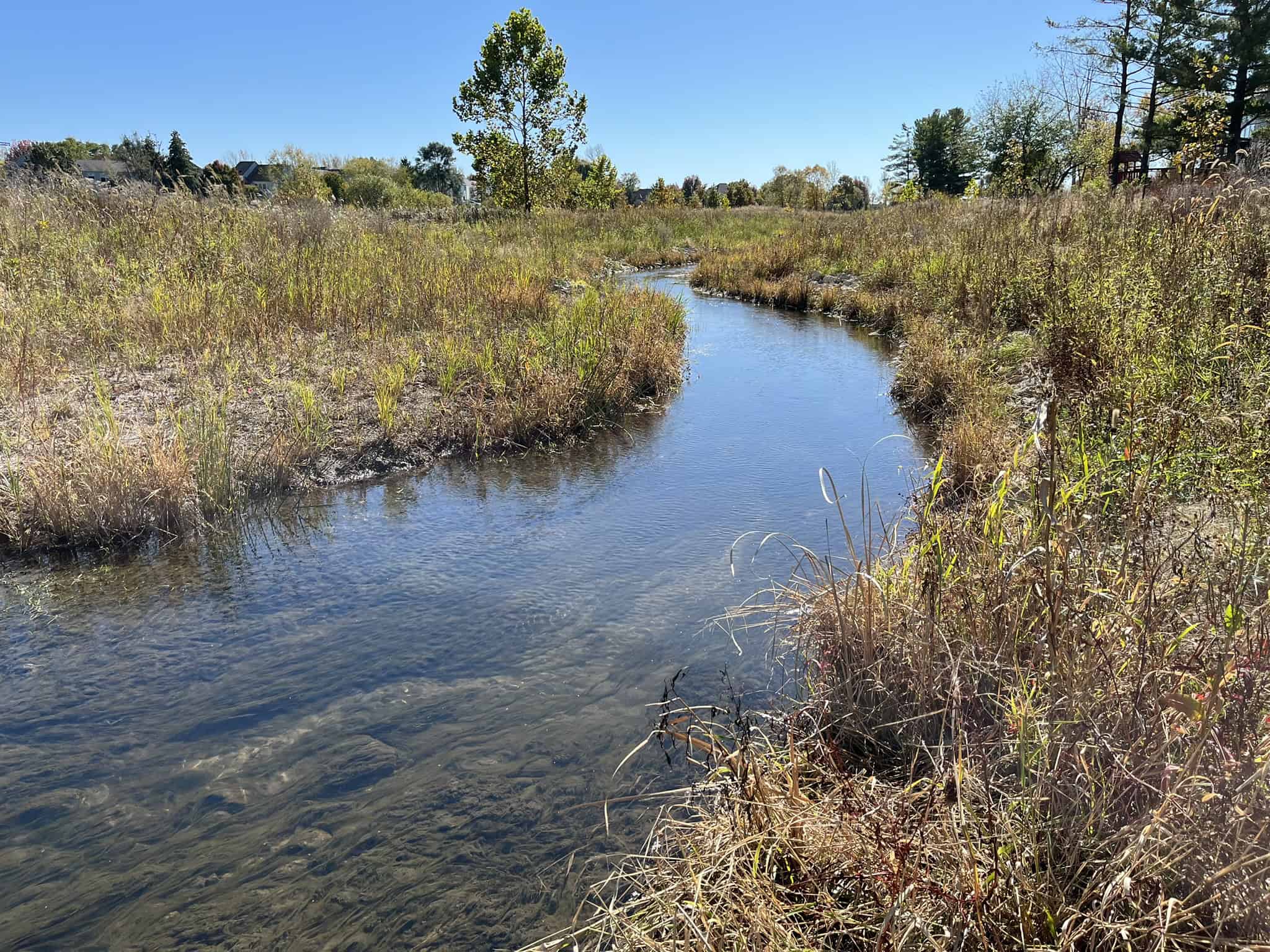
The Village partnered with HR Green as lead design engineer and project manager and Baxter & Woodman Natural Resources to deliver a comprehensive stream and riparian restoration spanning approximately 972 linear feet of Woods Creek and 22 acres of adjacent wetland and riparian area.
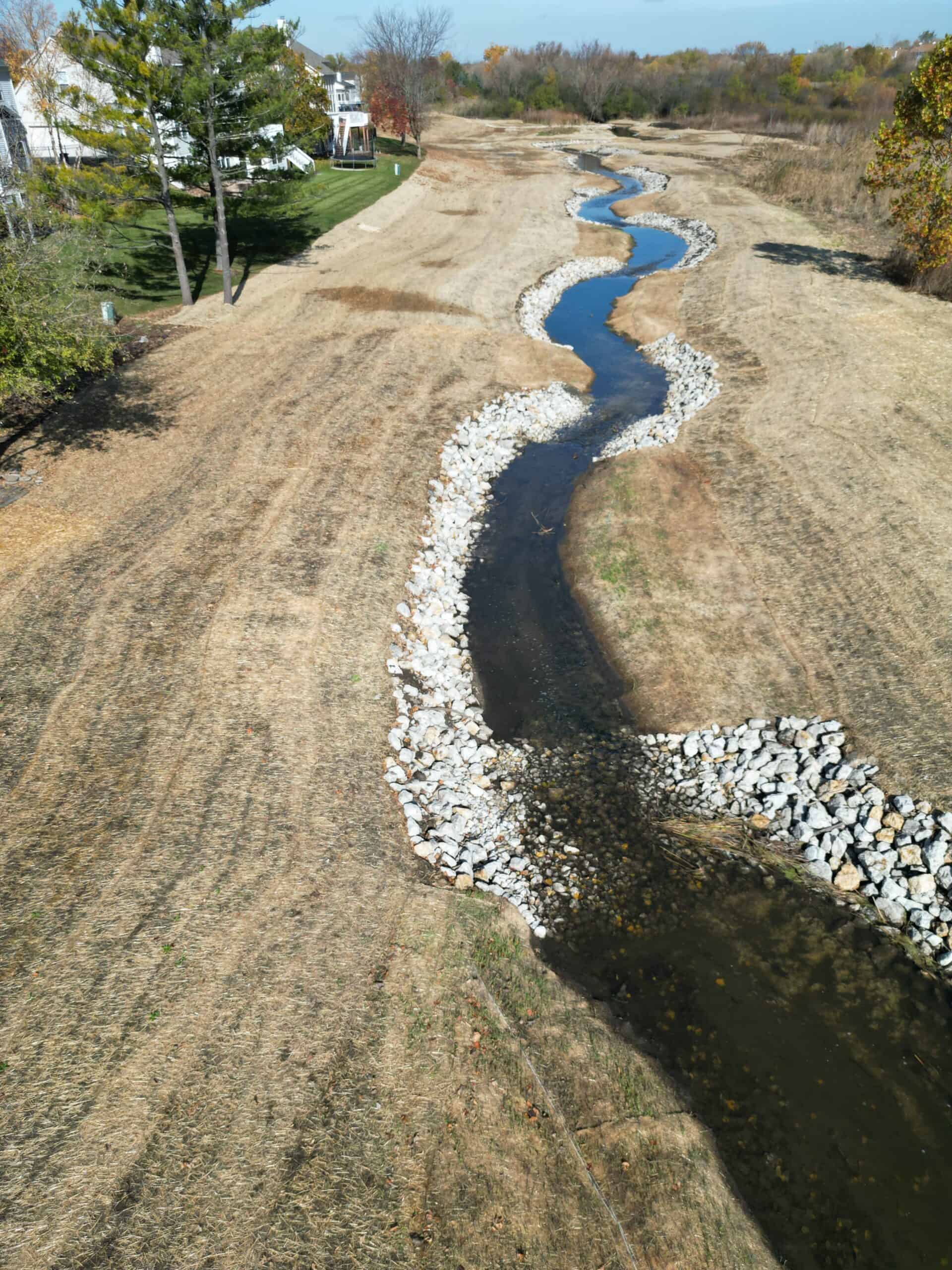
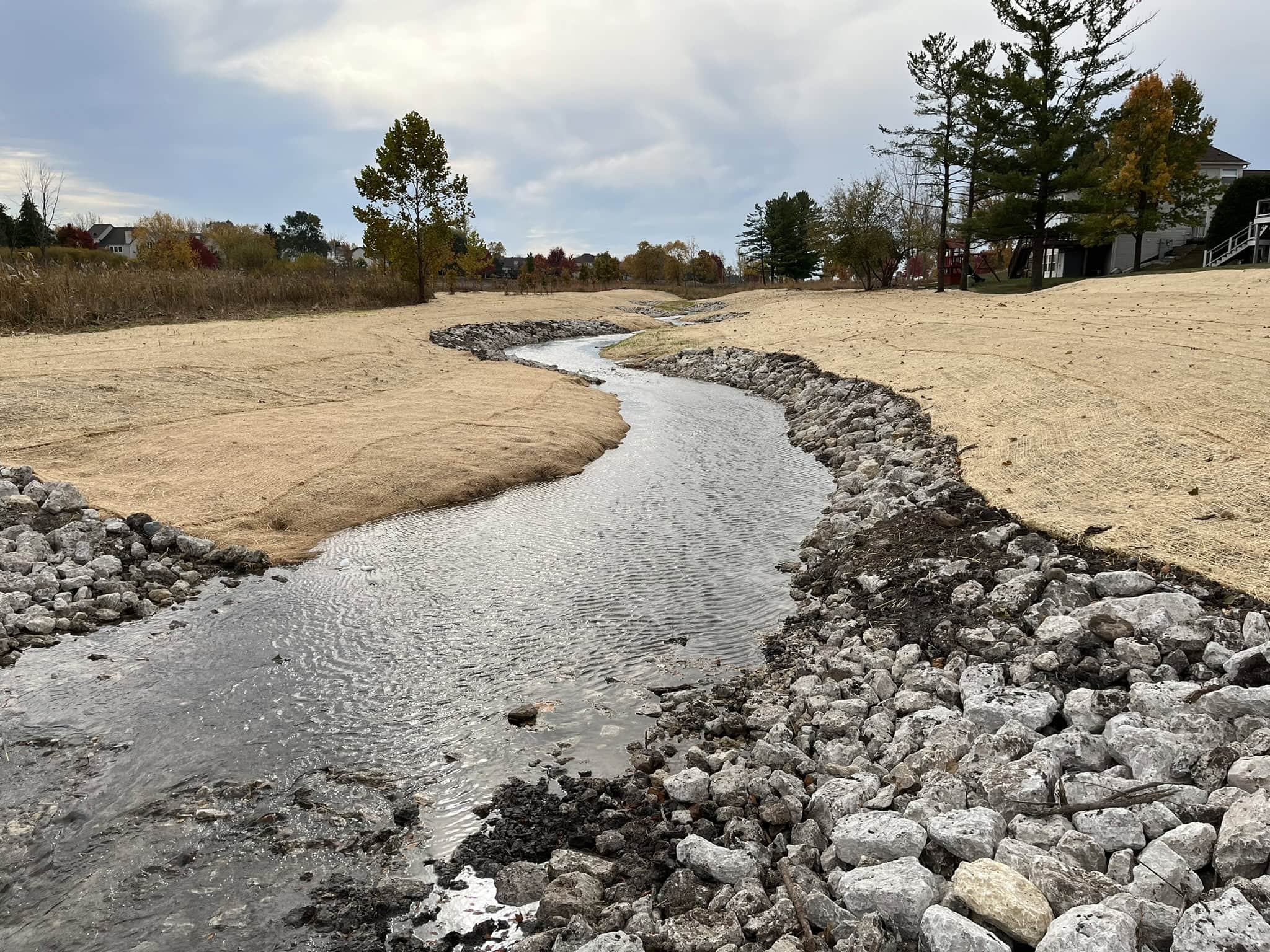
- Data-driven natural channel design: HR Green completed extensive field data collection and geomorphic assessment, measuring width-to-depth ratios, entrenchment ratios, slope, and related indicators, to guide a stable, naturalized design. The restored channel was designed as a two-stage system with floodplain benches at bankfull elevation, allowing high flows to spread out, reduce shear stress, and restore floodplain connectivity.
- Hydraulic verification and floodway compliance: HR Green modeled existing and proposed conditions to confirm the restoration would produce no rise in downstream water surface elevations. The grading approach achieved a 5.9:1 cut-to-fill compensatory storage ratio, increasing floodplain capacity while maintaining hydraulic conveyance within the regulated floodway.
- Stream and habitat reconstruction: The project reintroduced seven new meanders and installed ten riffle structures to restore hydraulic diversity, sediment transport balance, and aquatic habitat. Bank stabilization combined selective stone toe protection, biodegradable erosion control blankets, and deep-rooted native vegetation to provide immediate protection and long-term resilience.
- Wetland and riparian restoration: Over 22 acres, invasive woody species were removed and replaced with native riparian and wetland plantings. Eroded rills and small tributary channels within the wet prairie areas were stabilized, including targeted at-grade stone checks to protect restored communities.
- Constructability and permitting: Work occurred within wetlands and Waters of the U.S., requiring careful coordination and permitting with IDNR-OWR and the U.S. Army Corps of Engineers. Construction sequencing minimized impacts through low-flow scheduling, bypass pumping, sediment controls, and protection of remnant sedge meadows. A three-year operations and maintenance plan further reinforces environmental protection by supporting ecological succession, promoting diverse native plant communities, and limiting the spread of invasive species through prescribed burns, targeted mowing, and selective herbicide treatments.
Benefit
The Woods Creek Reach 6–7 Restoration transformed a severely eroded, channelized corridor into a stable, resilient stream and wetland system that performs better hydraulically and ecologically. By reconnecting the creek to its floodplain through a two-stage channel and floodplain benches, the project reduces erosive forces during storm events, improves flood storage, and helps limit downstream sedimentation and localized flooding. The reintroduced meanders, riffles, and native plant communities enhance aquatic and riparian habitat, promote nutrient uptake and groundwater recharge, and support improved water quality outcomes for Woods Creek and downstream Woods Creek Lake.