Challenge
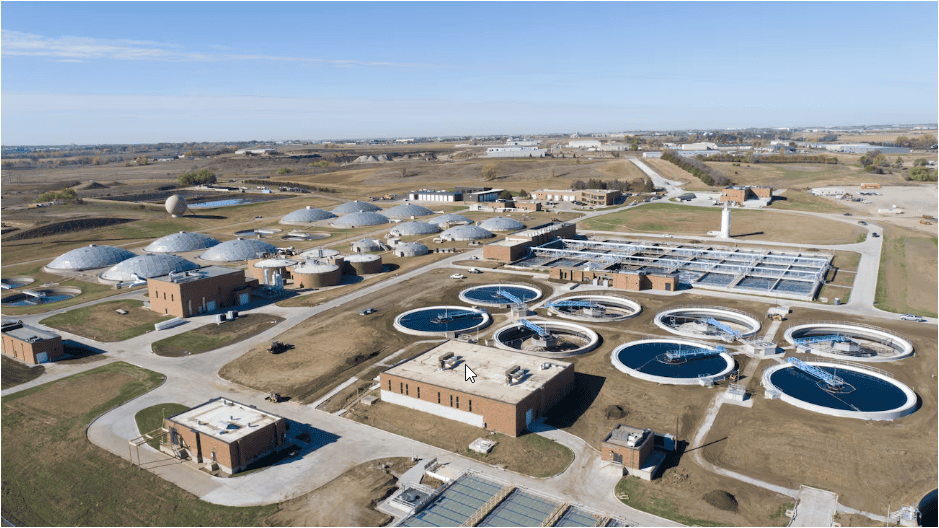
The Sioux Falls Water Reclamation Facility Improvements and Expansion project modernized a 40-year-old wastewater treatment facility while keeping it fully operational for more than 200,000 regional users. As the City’s largest capital project and the largest State Revolving Fund-funded program in South Dakota, the work carried major technical and operational complexity within a constrained, active site.
A primary challenge was executing major treatment plant improvements without interrupting service or compromising permit compliance. The project team had to manage more than 130 Maintenance of Plant Operations (MOPOs) and over 25 engineered process shutdowns tied to flow transitions, equipment isolation, electrical cutovers, and connections to new facilities. These activities required detailed hydraulic evaluation, sequencing, and close coordination among the City, Carollo Engineers as lead consultant, McCarthy Building Companies as CMAR, plant staff, and project support teams.
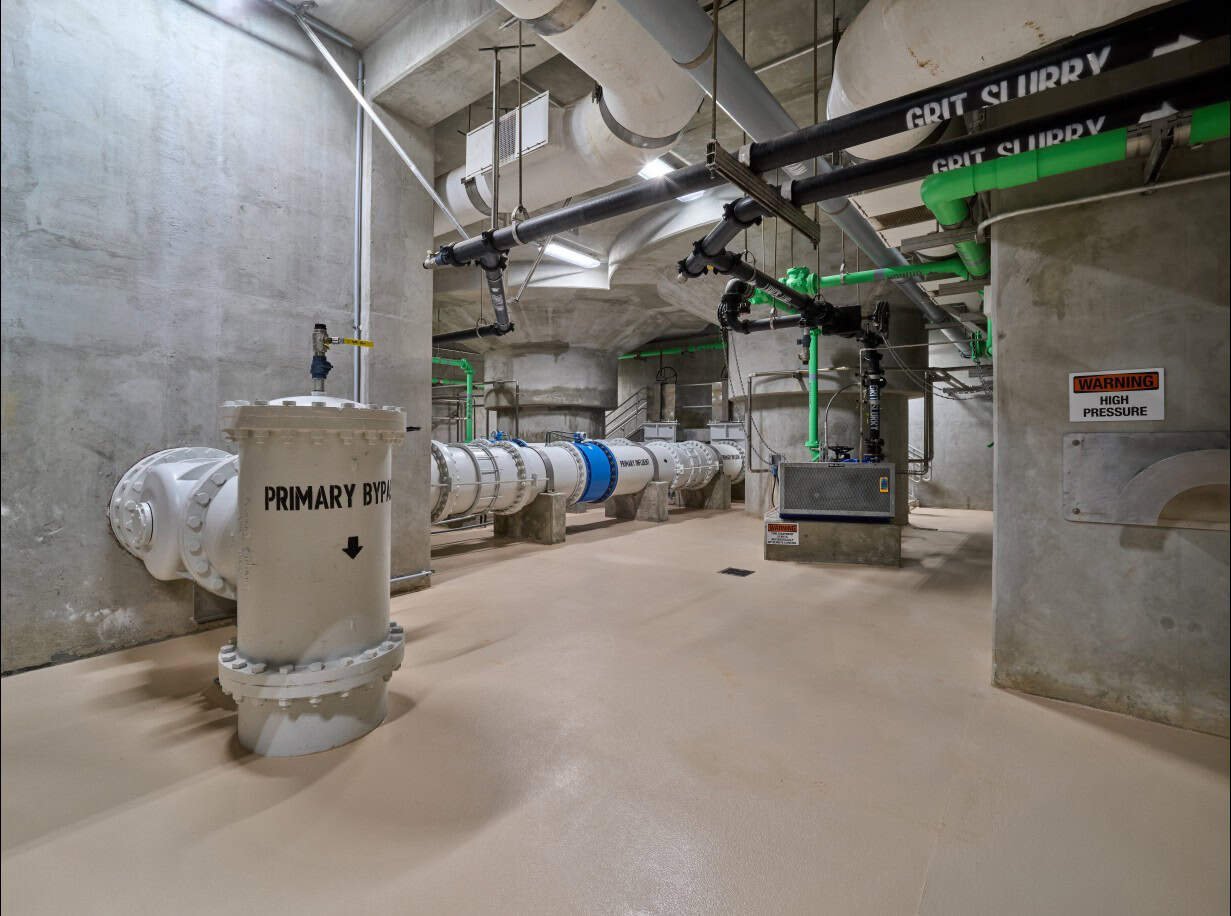
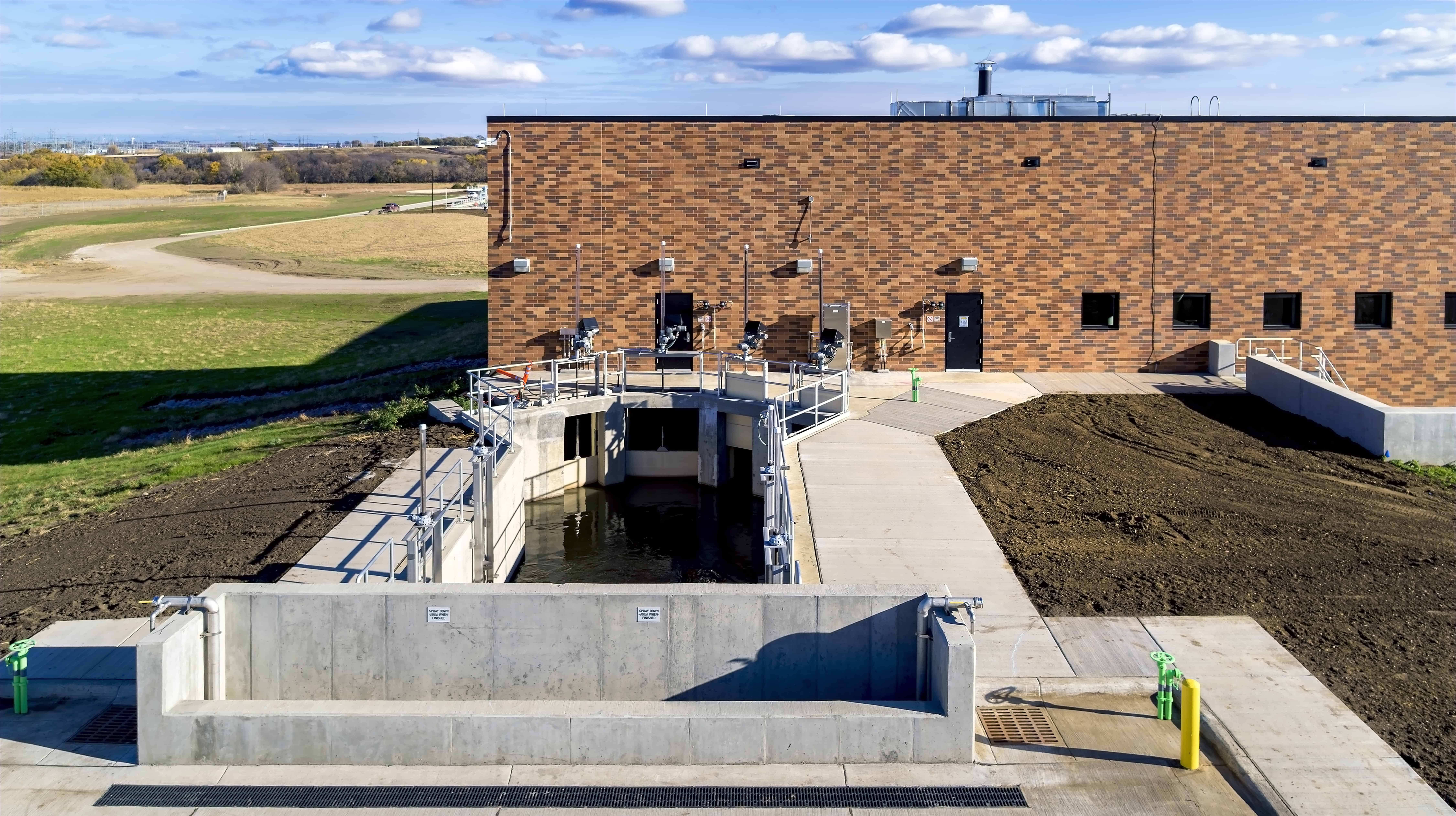
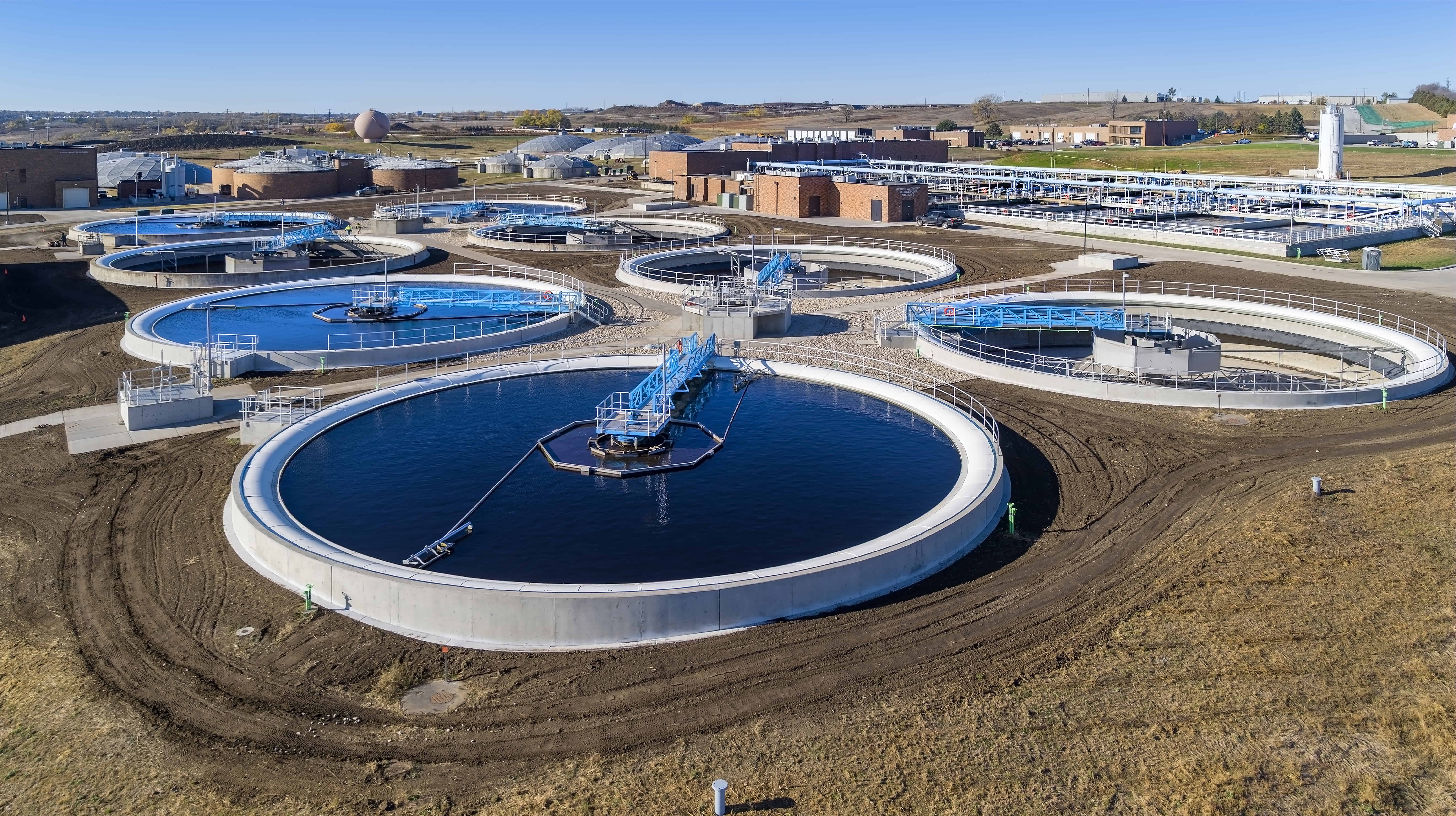
The work also involved substantial physical infrastructure improvements, including expansion of average annual daily treatment capacity from 21 MGD to 30 MGD, construction of seven new process structures, rehabilitation or upgrade of six existing facilities, and installation of a new triple-redundant 15 kV electrical distribution system. The scale of construction was significant, with extensive process piping, yard piping, duct bank, concrete, reinforcing steel, and quality-control testing performed under demanding Midwest weather conditions.
Solution
The project was delivered through a Construction Manager-at-Risk integrated project delivery approach that supported early contractor involvement, constructability review, risk management, and disciplined sequencing in an operating treatment plant. Carollo Engineers served as the lead consultant for planning, design, construction administration and inspection, startup, and commissioning, supported by HR Green and other subconsultants. HR Green’s role was focused on Construction Observation, providing field presence during construction activities and supporting documentation and coordination as the improvements were built and brought online.
The improvements included new and upgraded aeration systems, clarifiers, piping networks, chlorine contact basin expansion, solids handling-related systems, and advanced instrumentation and controls to support treatment performance and operational reliability. The electrical scope replaced the aging 5 kV system with a triple-redundant 15 kV distribution system, improving resiliency during outages, equipment failures, and severe weather events.
Because construction had to occur around live treatment operations, shutdowns and tie-ins were planned in detail and often executed during overnight or low-flow windows. HR Green’s construction observation role supported this effort by maintaining on-site awareness of ongoing work, observing construction progress during critical activities, and helping the broader team track work performed in an environment where safety, sequencing, and operational continuity were central to every phase.
Benefit
The completed improvements position Sioux Falls and its partner communities for long-term growth by expanding wastewater treatment capacity, modernizing infrastructure, and strengthening system resilience. The project protects public health and the Big Sioux River while supporting future residential, commercial, and industrial development across the region.