CHALLENGE
For several decades, many communities have required stormwater detention to compensate for increased impervious surfaces resulting from growth and development. In many cases, detention basins were designed only for large 100-year storm events. However, communities are now challenged to consider a wider range of storm events and their potential impacts, while also exploring how detention basins can improve water quality and habitat.
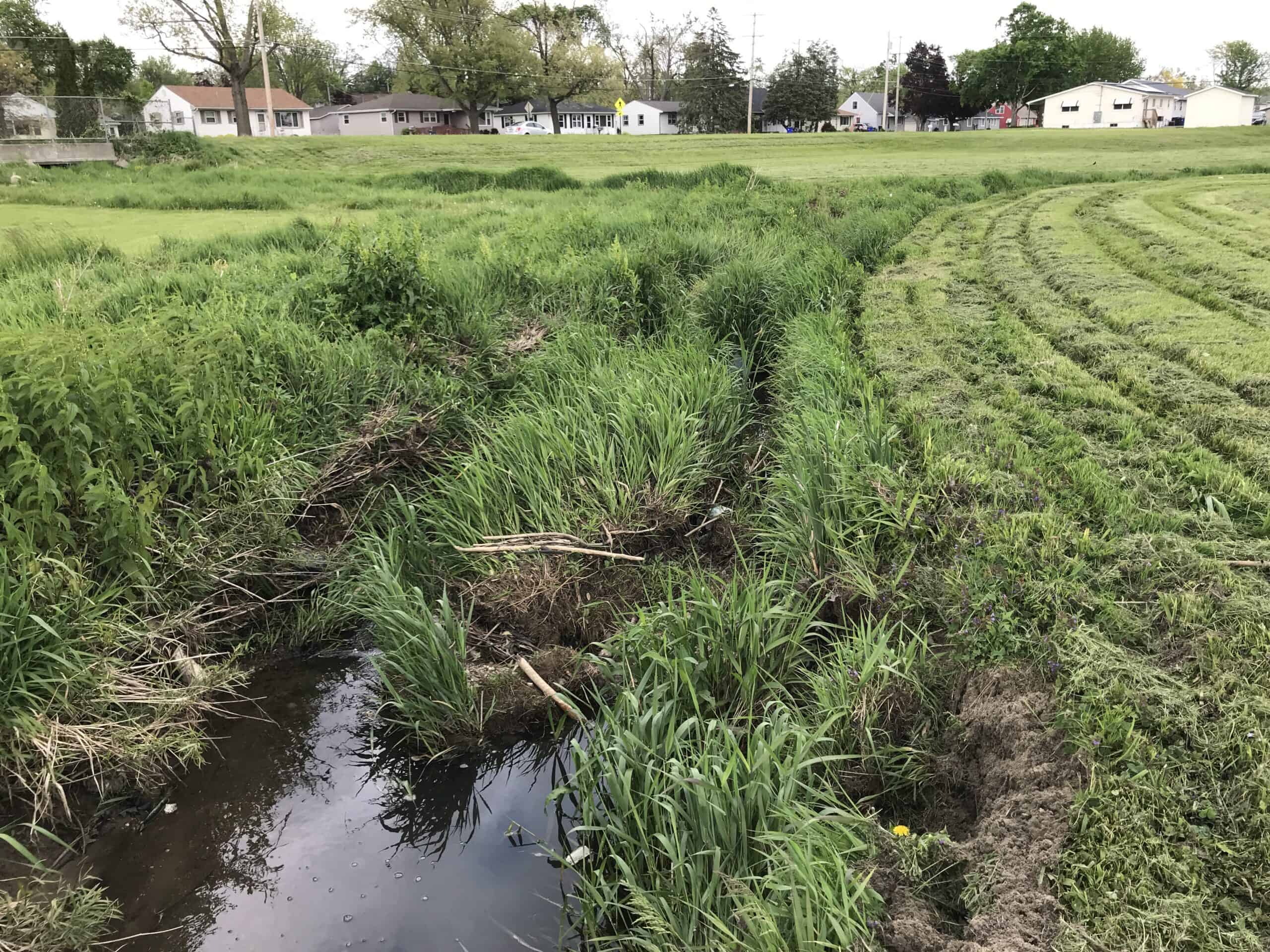
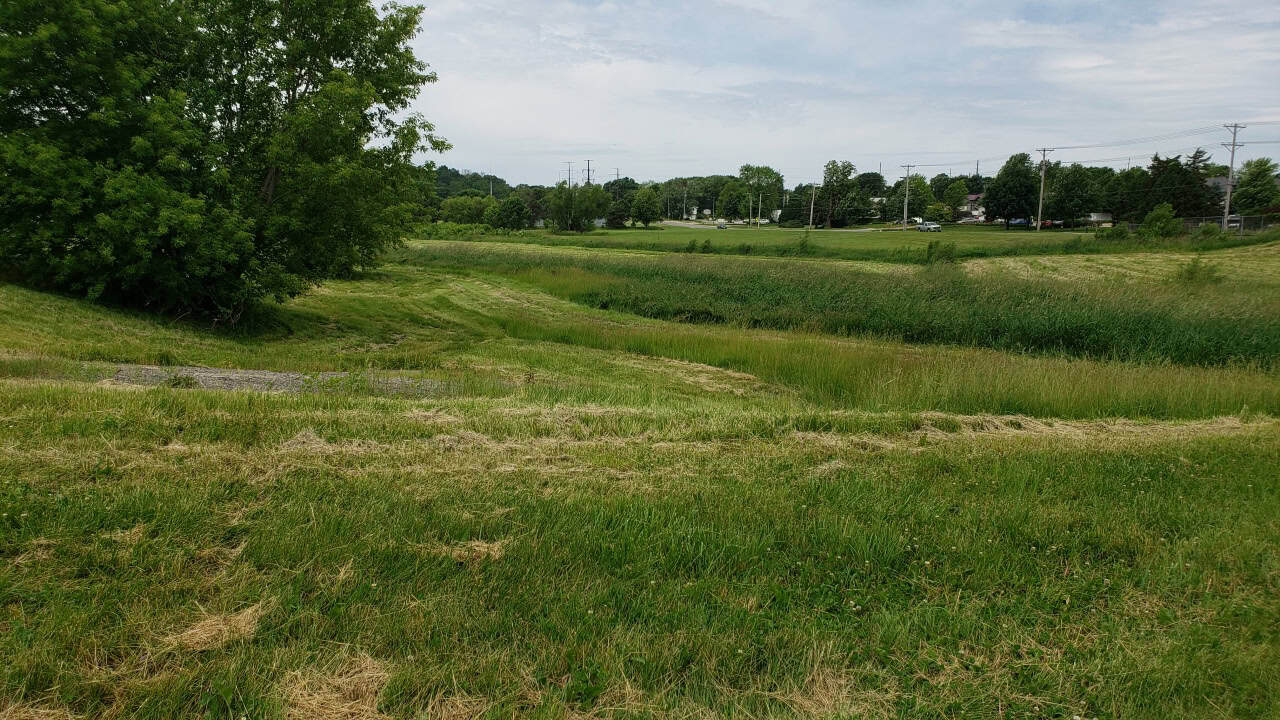
The E Avenue Regional Detention Basin in Cedar Rapids was installed in the late 1980s and early 1990s and generally meets the basic function of a regional detention basin for a 100-year event. Despite this, residents downstream of the basin have consistently experienced significant flooding during rain events of varying sizes and frequencies, regularly impacting basements, homes, and street access.
SOLUTION
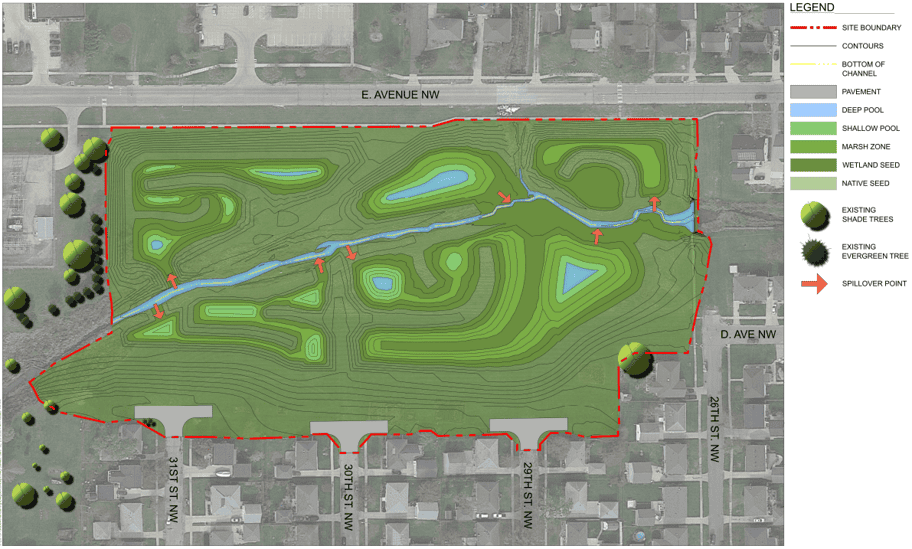
As part of the City of Cedar Rapids’ Stormwater Master Plan efforts, watershed modeling and analysis determined that reconfiguring the basin and outlet structure would better optimize downstream flows during a variety of storm events while aligning with the Iowa Stormwater Management Manual’s Unified Sizing Criteria.
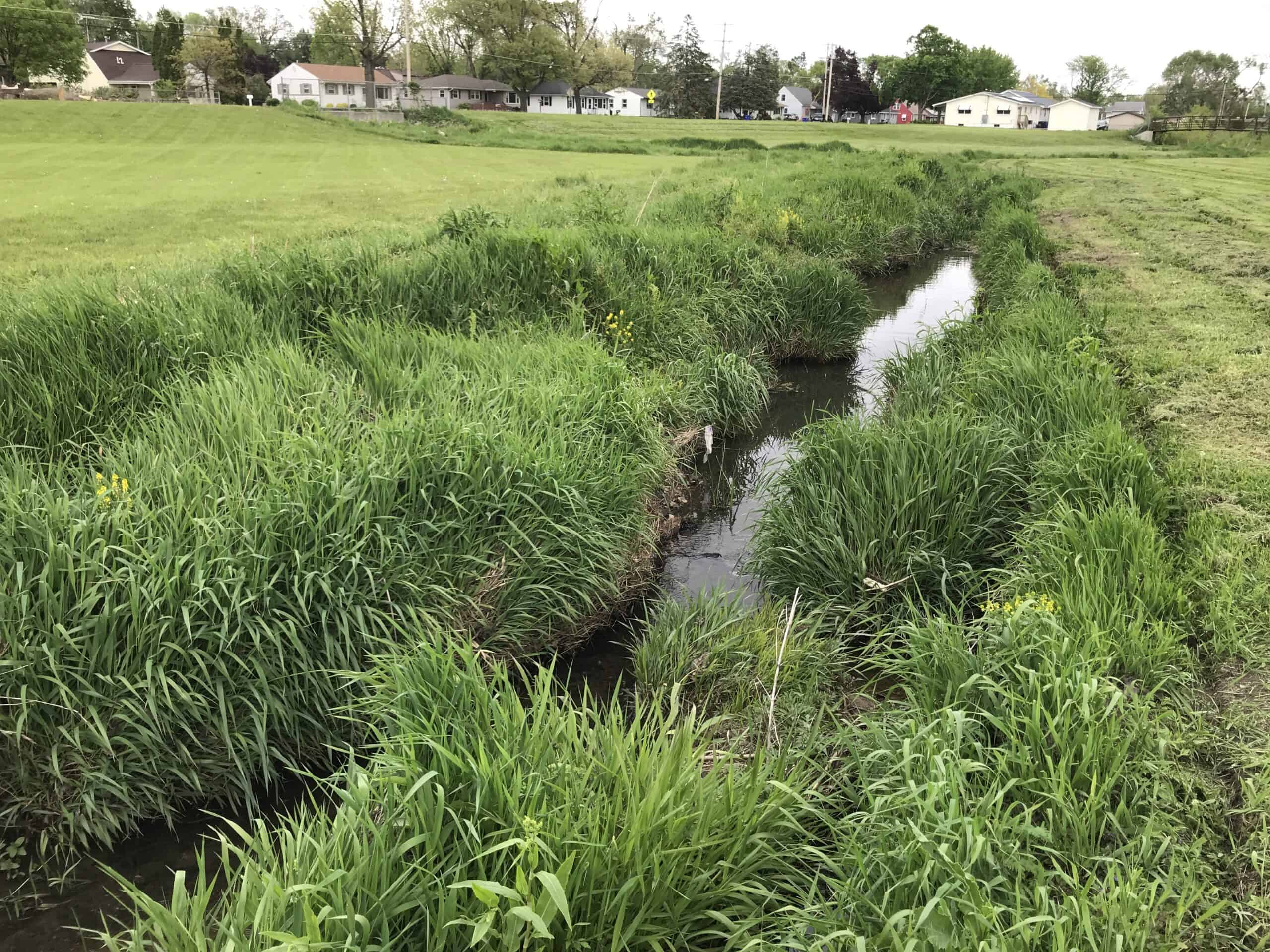
The City also pursued a complex of wetland elements to filter stormwater during low-flow events and provide natural habitat. During excavation to increase basin capacity, opportunities were identified to incorporate additional water quality features, including long sinusoidal low-flow swales and deep pools. These enhancements provide significant ecological benefits to the area, and HR Green’s design contract was expanded to include these natural improvements.
The project is located within a FEMA-regulated floodplain and adjacent to wetlands, requiring DNR floodplain permitting, USACE Section 404 permitting, a no-rise certificate supported by HEC-RAS analysis, wetland and stream delineations, and a historical cultural resources study. All of these services were provided by HR Green for the City of Cedar Rapids. Easements were also required, and HR Green facilitated the drafting of easement documents to support negotiations for the project.
BENEFIT
As the project scope evolved, additional services were added beyond the standard design scope, including grant writing and administration, floodplain permitting, water main and sanitary sewer improvements, cul-de-sac improvements, trail alignment planning, and ecological enhancements within the basin.
HR Green leveraged its multidisciplinary team and extensive in-house resources to successfully meet the project’s expanding needs, providing comprehensive support throughout planning, permitting, design, and implementation.