
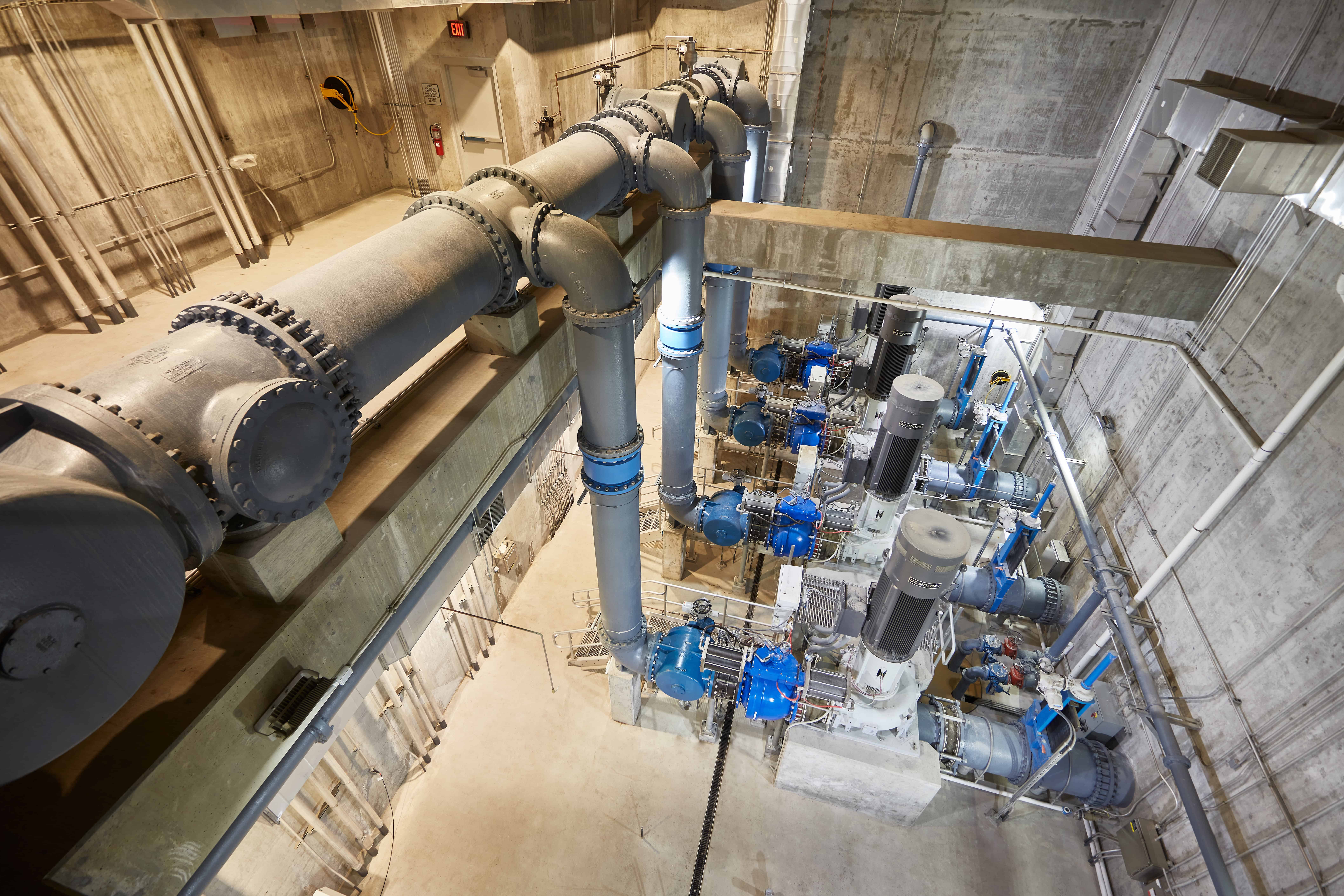
Rehabilitating a lift station is more than repairing aging equipment, it’s an opportunity to modernize a critical piece of your wastewater system. By applying proven best practices, municipalities can extend asset life, improve reliability, and enhance operator safety. Successful rehabilitation focuses on optimizing wet well hydraulics, improving pumping redundancy, upgrading controls and communication systems, and enhancing odor and corrosion protection. Modernizing pumping equipment, electrical/controls systems, and code compliance makes the station easier to maintain and positions it to remain resilient for decades to come.
In this article, we focus specifically on the best practices that help municipalities get the most value out of a rehabilitation project. The sections that follow highlight key considerations such as pumping redundancy, wet well optimization, pump selection, technology upgrades, odor and corrosion control, code compliance, site layout, and effective construction staging, each playing a crucial role in delivering a lift station that is safer, more efficient, and built for the future.
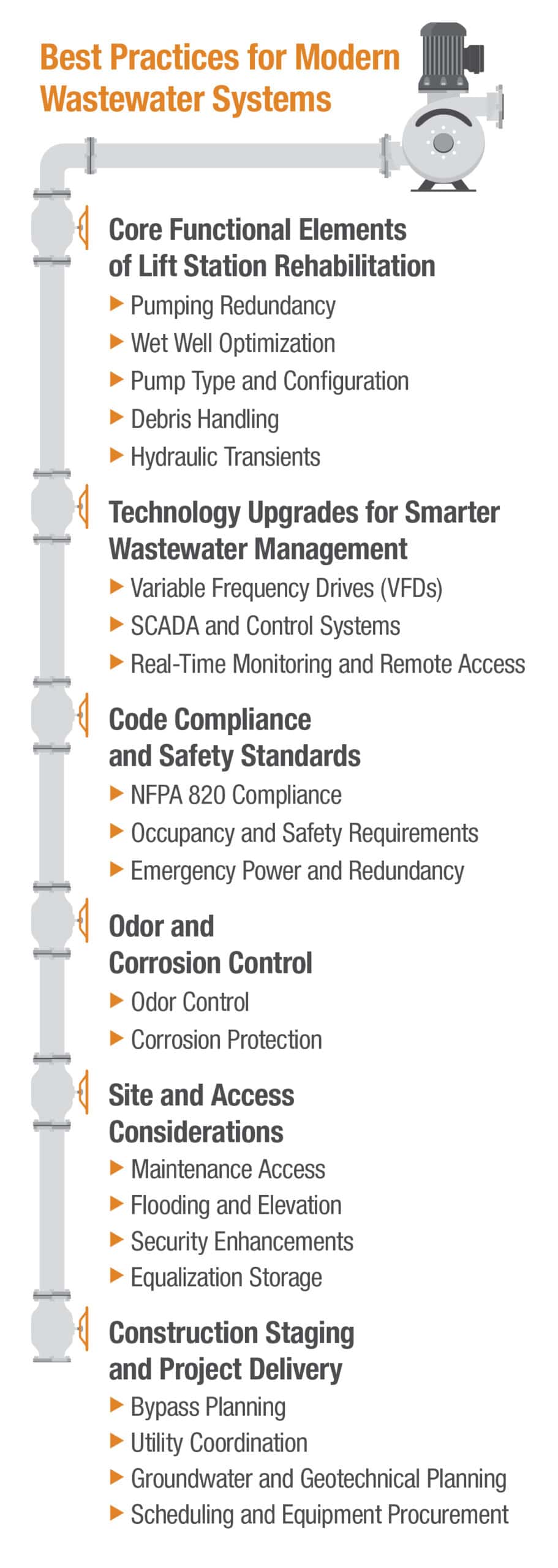
Core Functional Elements of Lift Station Rehabilitation
Every successful rehabilitation begins with understanding the station’s fundamental systems. The following components form the backbone of reliable, maintainable lift station design.
Pumping Redundancy
A dependable lift station must include standby pumping capacity. This allows flow to be maintained during peak demand or when a primary pump fails. Automatic alternation of pump operation balances wear and extends equipment life. Following redundancy standards helps utilities meet reliability and regulatory expectations.
Wet Well Optimization
Older wet wells often have flat bottoms or poor geometry that allow solids and grease to accumulate. Modernizing the wet well by adding sloped floors, benching, and inflow orientation improves self-cleaning, reduces clogging, and minimizes manual maintenance.
Pump Type and Configuration
Choosing the right pump type is essential. For areas with high rag or debris content, chopper or screw centrifugal pumps are preferred. In flood-prone areas, submersible-rated motors and controls provide protection if the dry well floods. Matching pump style and materials to site conditions supports long-term reliability.
Debris Handling
Debris management is a critical part of lift station design. Large municipal systems or combined sewer areas may require mechanical bar screens or comminutors to remove or break down solids. Smaller stations can benefit from non-clog impeller or chopper pumps that pass solids without frequent clogging. The right approach depends on sewer characteristics, debris load, and available maintenance staff.
Hydraulic Transients
Rapid pump starts, valve closures, or flow surges can create water hammer that damages force mains and pump assemblies. Designing for hydraulic transients with surge tanks, relief valves, and air/vacuum valves helps protect the system and extend equipment life.
Technology Upgrades for Smarter Wastewater Management
Technology is often the most transformative aspect of a rehabilitation project. Upgrading controls and automation can drastically improve energy efficiency, operator visibility, and emergency response.
Variable Frequency Drives (VFDs)
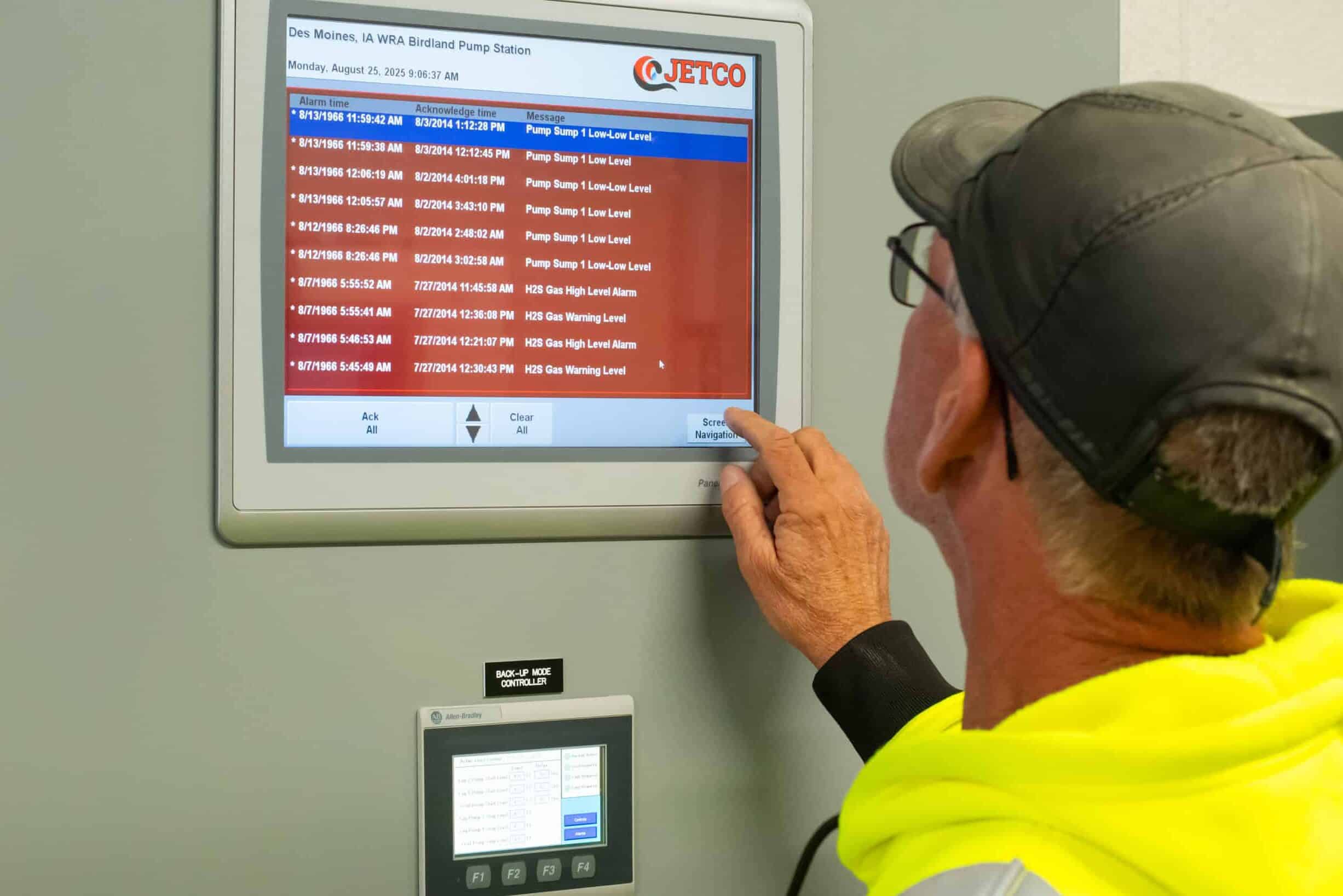
VFDs adjust pump speed based on flow or level conditions, reducing on/off cycling, saving energy, and lowering electrical demand charges. They also reduce mechanical stress, improving motor longevity.
SCADA and Control Systems
Many older stations still rely on outdated relay-based panels. Replacing them with PLC-based control systems and adding touchscreen interfaces (HMIs) allows real-time control, data logging, and automation. SCADA integration provides centralized monitoring and early warning alarms for performance issues.
Real-Time Monitoring and Remote Access
Modern lift stations can now be monitored remotely using cloud-based dashboards or mobile apps. Operators can review performance trends, receive instant alerts, and detect anomalies before failures occur. This proactive approach helps utilities prevent downtime and reduce maintenance costs.
AI-Driven Predictive Maintenance and Analytics
The use of AI-driven analytics is emerging as a best practice in lift station rehabilitation. By synthesizing historical and real-time sensor data (e.g. pump cycles, wet well levels, vibration, and energy draw), machine learning models can detect anomalies that precede equipment wear, clogging, or electrical issues. These predictive insights enable utilities to schedule maintenance tasks based on condition rather than fixed intervals, reducing downtime and unplanned repairs. This approach also supports energy optimization by adjusting control strategies based on predicted flow patterns. AI algorithms can help utilities cut energy costs while improving reliability, effectively turning raw SCADA data into actionable operational intelligence.
Code Compliance and Safety Standards
Even when compliance is not the main driver of a rehabilitation project, it quickly becomes a necessary part of the scope. Electrical, mechanical, and structural improvements often trigger new safety and code requirements.
NFPA 820 Compliance
The National Fire Protection Association (NFPA) 820 standard defines hazardous classifications for wastewater facilities. Wet wells and valve vaults often fall under Class I, Division 1 or 2, depending on ventilation rates. When these areas are upgraded, explosion-proof lighting, sealed conduit, and purge-rated equipment may be required to maintain compliance.
Occupancy and Safety Requirements
The Ten States Standards define ventilation requirements and occupancy ratings. For example, a below-grade dry well can be classified as non-hazardous if adequate continuous ventilation is provided. Proper ventilation can reduce or eliminate hazardous classifications, simplifying facilities and avoiding the need for costly gas detection systems and explosion-proof ratings.
Emergency Power and Redundancy
Reliable backup power is essential for maintaining operation during utility outages. Permanent generators, transfer switches, or portable connection points help utilities comply with state redundancy standards and maintain service continuity.
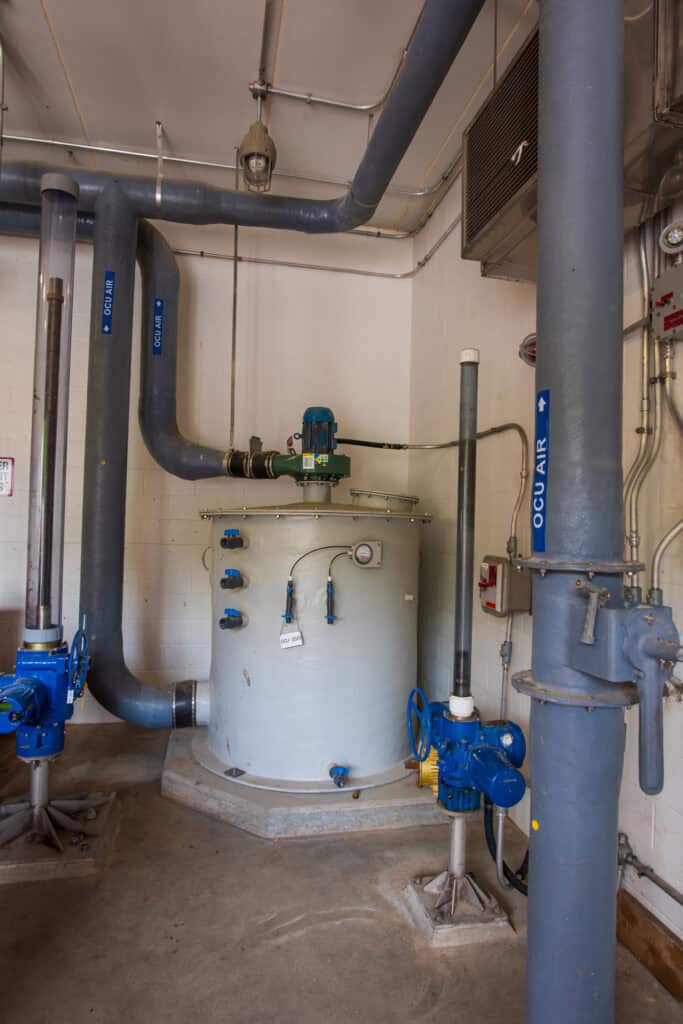
Odor and Corrosion Control
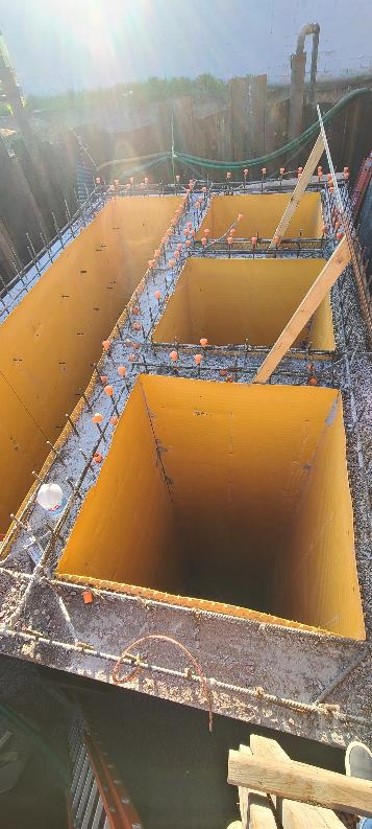
Odor and corrosion are two of the most common long-term challenges in wastewater lift stations. Rehabilitation provides the perfect opportunity to address both.
Odor Control
For smaller stations, activated carbon filters connected to vent systems offer cost-effective odor mitigation. Larger or high-flow systems may require biofilters or chemical dosing systems that treat hydrogen sulfide (H₂S) upstream. Adding nitrate or iron-based compounds in long force mains can prevent anaerobic conditions and eliminate odors at the source.
Corrosion Protection
Long-term exposure to H₂S can degrade concrete, steel, and ductile iron. Rehabilitation projects should include epoxy coatings, PVC or HDPE liner panels, and stainless-steel materials to protect against corrosion. This extends equipment and structure life and reduces the need for frequent replacement or repairs.
Site and Access Considerations
Good engineering design also considers how operators interact with the site. Accessibility and site layout often determine how successful a rehabilitation will be over the long term.
Maintenance Access
Make sure there is adequate space for crane trucks, vactor trucks, and maintenance equipment. Adding reinforced access surfaces, safe hatches, and clear vehicle paths allows staff to perform maintenance safely and efficiently.
Flooding and Elevation
In flood-prone areas, elevate control panels, standby generators, and electrical equipment above the flood protection elevation. Proper site grading, drainage, and elevation planning can prevent service disruptions and reduce future repair costs.
Security Enhancements
Lift stations in public or remote areas benefit from fencing, tamper-proof hatches, and security cameras. Access control systems help utilities monitor activity and protect valuable assets.
Equalization Storage
Where site space allows, equalization basins can help attenuate peak flows and reduce pump starts during storms. Equalization also smooths flow to downstream treatment plants, improving process stability and extending infrastructure life.
Construction Staging and Project Delivery
Construction staging is one of the most complex parts of lift station rehabilitation. It requires balancing live flow management, safety, and tight schedules while maintaining continuous operation.
Bypass Planning
Determine early whether the lift station can be staged with partial pumping capacity or isolation of wet wells or if a full bypass system is required. Bypass systems must be sized for peak flows and designed with redundancy to handle unexpected conditions.
Utility Coordination
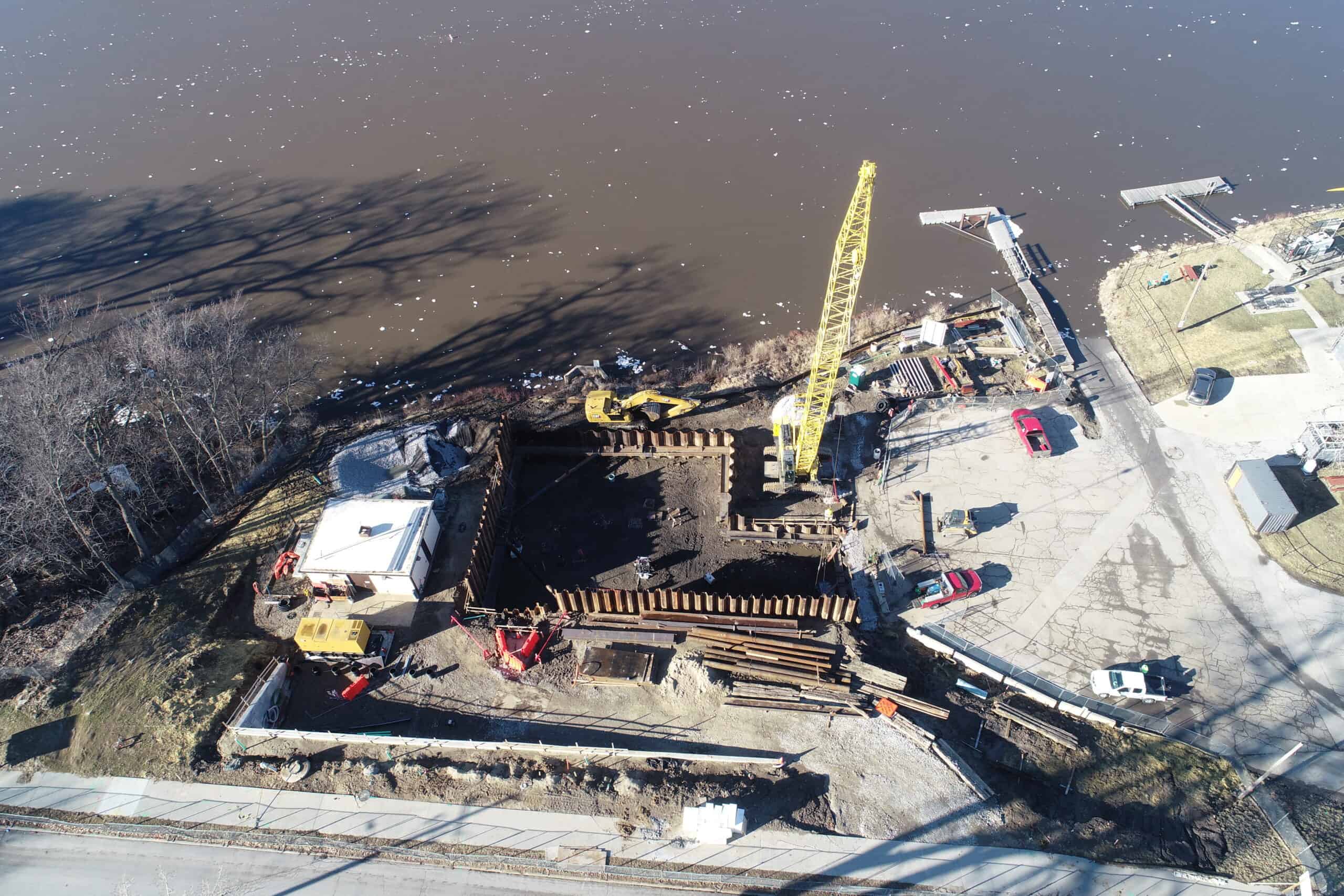
Older lift stations are often surrounded by water mains, fiber lines, gas pipes, and electric service. Early utility mapping, potholing, and coordination with utility companies help prevent costly conflicts during construction.
Groundwater and Geotechnical Planning
Many lift stations are in low-lying areas with shallow water tables or soft soil. The project may need to plan for dewatering wells or wellpoints, dampproofing treatments, and sometimes full sheeting or shoring if excavation depth or groundwater is significant.
Scheduling and Equipment Procurement
Staging areas should include space for cranes, bypass piping, and equipment storage. Ordering custom pumps, MCCs, and control panels early in the process prevents delays and supports timely project delivery.
Strategic Lift Station Rehabilitation for Long-Term Efficiency
Municipalities face increasing pressure to modernize their wastewater infrastructure while managing costs, adhering to regulations, and meeting community expectations. Lift station rehabilitation provides a powerful way to extend asset life, reduce maintenance costs, and enhance performance when executed strategically.
By following best practices in pump redundancy, wet well design, control upgrades, odor management, and site planning, utilities can transform aging lift stations into efficient, reliable systems ready to serve into the next generation.
At HR Green, our wastewater engineering experts help communities across the country evaluate existing infrastructure, plan cost-effective rehabilitation programs, and implement modern, code-compliant solutions. With the right design and execution, lift station rehabilitation not only fixes immediate issues but also strengthens the foundation for sustainable, resilient wastewater systems for decades to come. Contact HR Green today to schedule an infrastructure assessment.