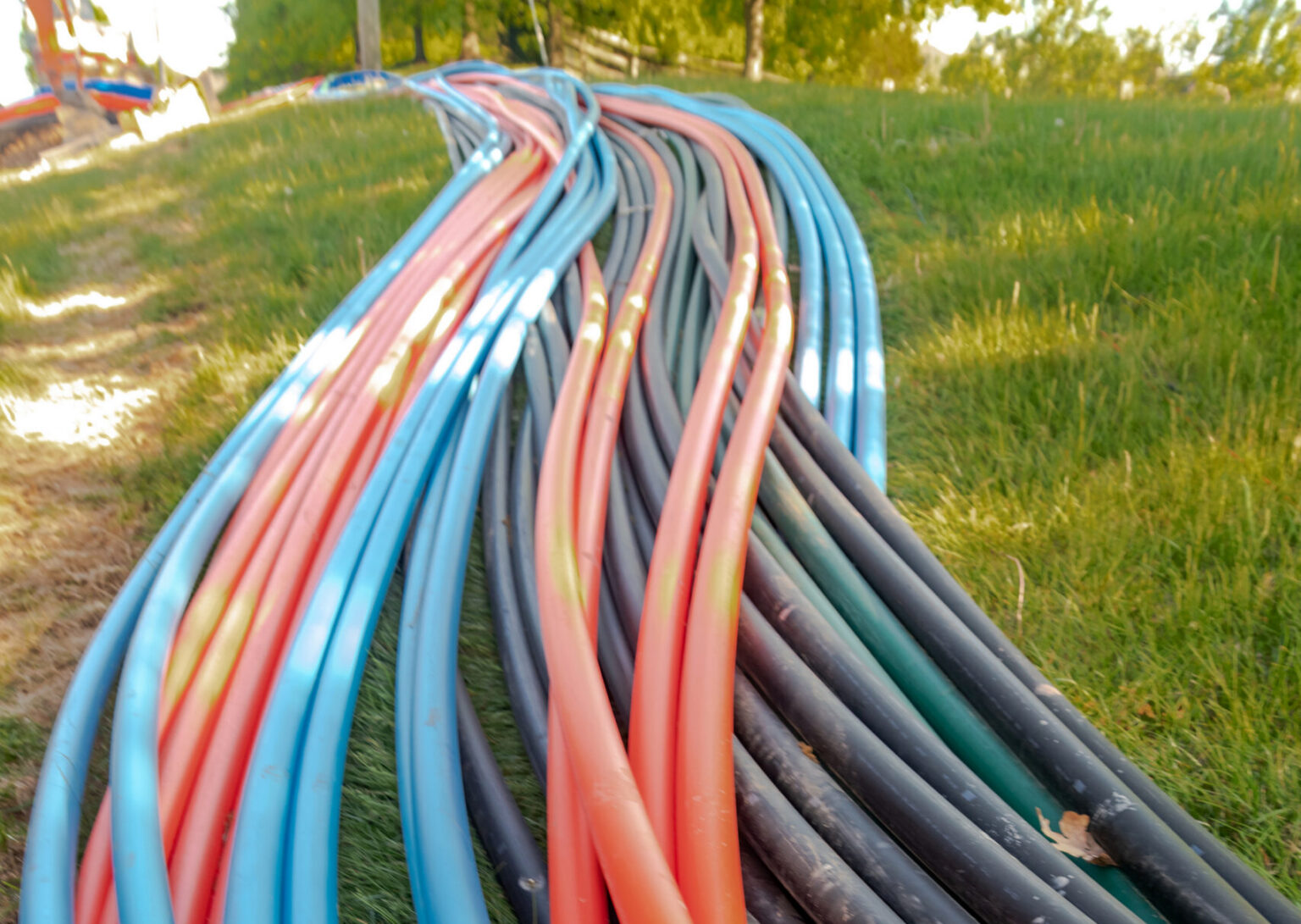
When an Internet Service Provider or prime contractor plans a broadband deployment, capital expenditure line items face intense scrutiny. Outside Plant (OSP) engineering typically represents only 8% to 15% of total project capital outlay. Because that footprint is small, it can be tempting for procurement teams to treat engineering like a commodity and choose the lowest price-per-mile bid to reduce upfront costs.
In civil construction, that assumption is a costly mistake. OSP engineering may account for only a small slice of the budget, but its output determines how the remaining 85% to 92% of capital is spent on field labor, heavy equipment, permitting, and materials. Choosing low-cost engineering tends to produce incomplete field walkouts and unverified utility depths. It also produces flawed permit submissions. Each of those problems destroys margin once crews hit the field.
Why the Lowest Engineering Bid May Not Produce the Lowest Project Cost
The math behind low-bid engineering is deceptive. In civil and utility infrastructure, project overruns are the norm rather than the exception. According to a comprehensive global construction study published by the Oxford Global Projects Database (via McKinsey & Company), 98% of large-infrastructure projects experience cost overruns exceeding 20%, with average cost escalations reaching 80% over original budgets.
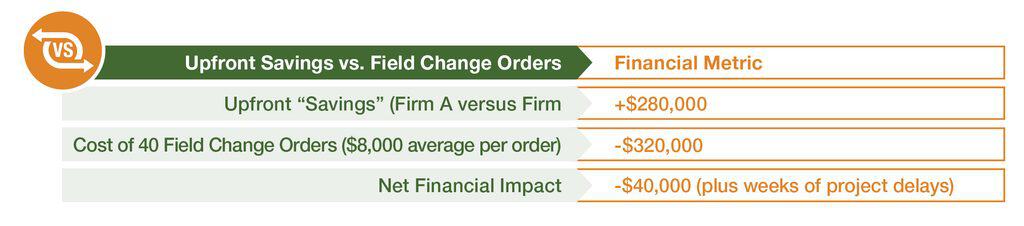
In underground fiber construction, a single unmapped utility line, missing vault detail, or unexpected rock formation generates a field change order. A low-bid engineering firm might save $1,200 per mile upfront, but one field change order for a re-bore or emergency utility locate can run thousands of dollars on its own. It only takes a handful of preventable change orders across a 100-mile route to erase that entire upfront savings.
What Does Standby Time Cost on a Directional Drilling Project?
When incomplete engineering drawings force a crew to halt work—to wait for an emergency utility mark-out, say, or resolve a route conflict—the contractor doesn’t absorb that cost. They bill the ISP for standby time.
Public rate sheets filed for heavy emergency response and civil operations show how expensive sitting idle really is. The U.S. Federal Emergency Management Agency‘s Schedule of Equipment Rates lists standard operating costs for heavy directional drills, vacuum excavators, and support trucks running hundreds of dollars per hour in equipment alone, before factoring in fully burdened operator labor.
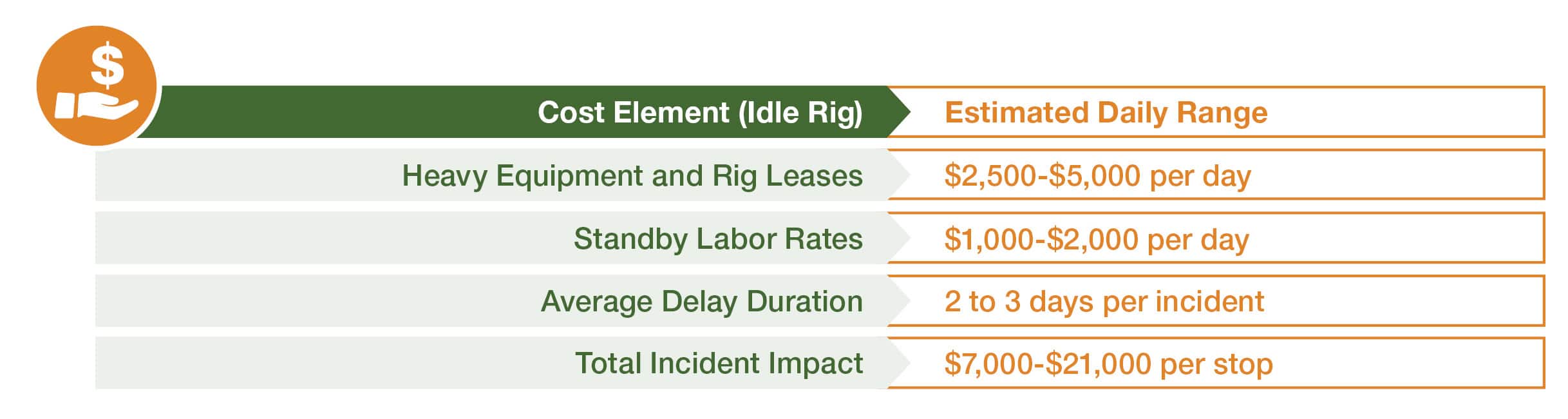
When a Horizontal Directional Drilling crew grinds to a halt because low-cost engineering skipped Subsurface Utility Engineering field verification, standby fees start accruing immediately. A thorough walkout and utility mapping process from the start prevents days of dead time where contractors bill ISPs to sit idle.
How Incomplete Field Data Creates Crew Standby Costs
Inexperienced or low-bid engineering firms often fail to meet the submission standards of state Departments of Transportation, local municipalities, and Class I railroads. A rejected permit doesn’t cost days. It costs months.
Railroad crossings carry their own risk. The Federal Railroad Administration and Class I rail operators enforce strict engineering standards for wireline crossings, and the U.S. Department of Transportation‘s Railroad Right-of-Way Crossing Guidance notes that standard permit processing cycles typically take 90 to 180 days. A single engineering error or non-compliant casing detail can reset that review clock from the beginning.
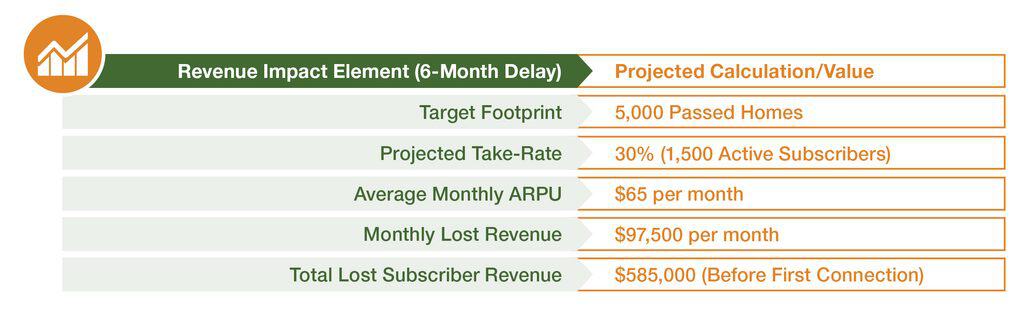
The revenue math is unforgiving. FCC Urban Rate Survey data puts the national average baseline cost for residential broadband around $65 to $70 per month. If flawed permit drawings delay turn-up of a 5,000-home neighborhood by six months, an ISP expecting a 30% take-rate forfeits $585,000 in gross subscription revenue before a single customer connects. Accurate permit drawings, submitted correctly the first time, protect that revenue window.
BEAD Grant Compliance Requirements for OSP Engineering
Federal programs like the Broadband Equity, Access, and Deployment (BEAD) program have changed what a network design has to do. It’s a construction plan, but it’s also a legal compliance document.
The National Telecommunications and Information Administration sets baseline rules in its BEAD Program Notice of Funding Opportunity. Two requirements matter most here:
- Location fabric alignment – subgrantees must map every served location precisely, address by address.
- As-built verification – subgrantees must deliver verified, geographic as-built records confirming that fiber was deployed at the approved depth and route.
Cheap engineering tends to produce inaccurate closeout documentation. When a state broadband office audit finds discrepancies between what a grant application promised and what actually got placed in the ground, ISPs face frozen funding disbursements or federal clawbacks. Engineering that builds BEAD-compliant GIS data into the workflow from day one protects that grant eligibility before it’s ever tested by an audit.
Is Low-Bid OSP Engineering Worth the Risk?
The lowest upfront engineering price rarely produces the lowest total project cost. Shaving 20% off engineering fees can trigger field change orders, idle crew fees, permitting delays measured in months, and grant compliance risk that puts funding itself at risk.
The firms that get better financial outcomes on OSP projects aren’t the ones chasing the lowest price-per-mile. They’re the ones whose engineering partners do thorough field walkouts, know the local permitting process, and make fewer errors the first time around.
Planning an OSP project? Contact HR Green to learn how the right engineering approach can help you avoid costly surprises and protect your investment.