
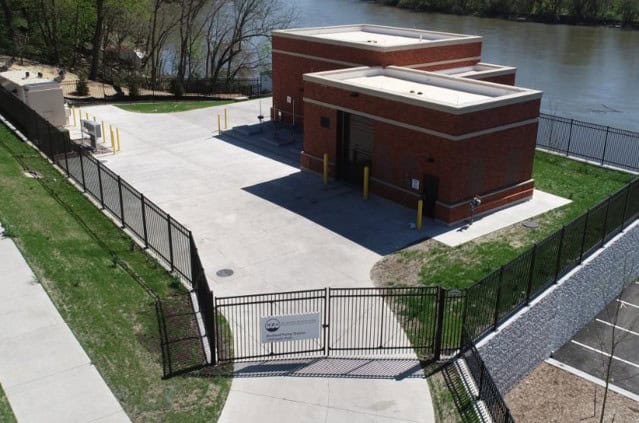
Municipal lift stations, sometimes referred to as pumping stations, play a vital role in wastewater collection systems by transferring sewage from lower to higher elevations when gravity flow alone is not sufficient. While lift stations help reduce infrastructure costs through shallower sewers and smaller pipes, they also introduce a higher level of operational complexity. Each lift station requires properly functioning components such as buildings, wet wells, pumps, power systems, controls, and piping to operate efficiently.
Without consistent maintenance and modern design provisions, these stations can quickly become weak points in the collection system. At HR Green, we believe that smart engineering solutions, such as incorporating pumping redundancy, backup power, and alarm systems, are essential to maintaining reliability and efficiency.
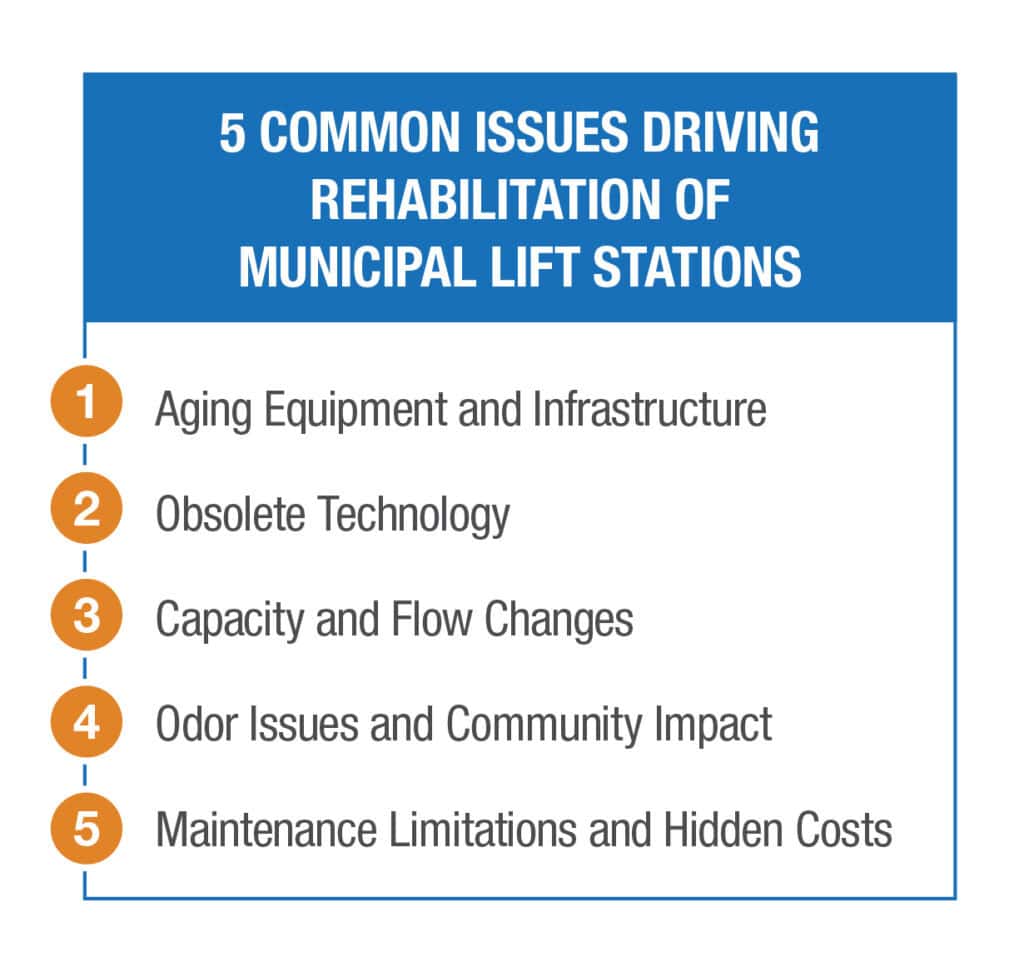
Lift station rehabilitation is often driven by a set of common issues. Addressing these challenges effectively can help municipalities improve system performance and extend the life of critical infrastructure.
Common Issues Driving Rehabilitation of Municipal Lift Stations
1. Aging Equipment and Infrastructure
Many municipal lift stations were constructed between 1975 and 1990, meaning that much of the equipment now exceeds 40 years of service life. Over time, pumps, motors, valves, controls, and concrete structures degrade due to corrosion, hydrogen sulfide exposure, and general wear. Even if a station is technically operational, it can be fragile, costly to maintain, and at increased risk of sudden failure or noncompliance with regulatory standards.
These aging components make rehabilitation or replacement not just a consideration, but a necessity. As utilities face growing maintenance costs and rising risks, many are proactively investing in system upgrades to preserve reliability for the next generation.
2. Obsolete Technology
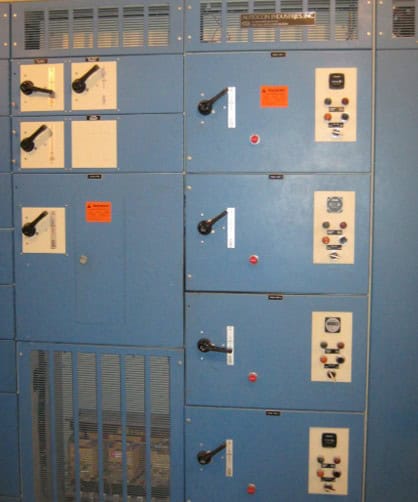
Older lift stations often rely on constant-speed pumps with minimal instrumentation or control features. These systems tend to operate on basic float mechanisms, resulting in frequent pump cycling and increased wear. Electrical systems can lack surge protection, arc-flash labeling, and critical safety features.
Controls in many older facilities still depend on mechanical timers or relay logic, which offer no flexibility, programming, historical data collection, and limited ability to predict failure. Without modern automation or SCADA integration, operators are left with limited visibility, minimal control, and frequent emergency callouts. Upgrading to variable frequency drives (VFDs), modern control panels, and real-time data monitoring can transform operational efficiency and safety. By applying AI-based predictive analytics to lift station data, utilities can shift from reactive maintenance driven by alarms to proactive maintenance driven by equipment condition.
3. Capacity and Flow Changes
As communities grow, wastewater systems face increased demand. Many lift stations were originally designed for smaller populations and lower infiltration and inflow (I&I) levels. (See Flow Rate versus Time of Day figure.) Today, population growth, upstream development, and aging infrastructure often result in higher peak flows—sometimes five to ten times higher than dry-weather flow rates.
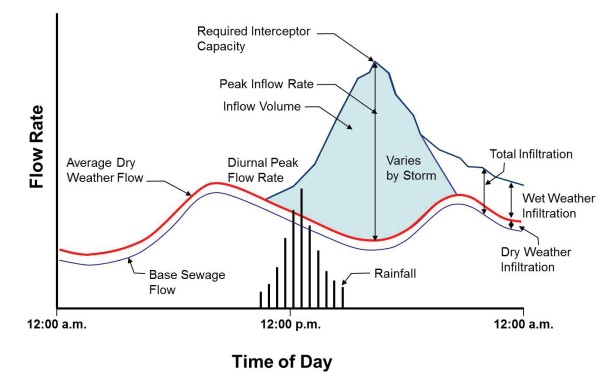
Wet-weather events can further exacerbate these challenges by introducing inflow from roof drains, sump pumps, and open cleanouts. When upstream improvements push more wastewater into older downstream stations, it can create system bottlenecks and overflows. Proper planning and flow modeling during rehabilitation can help scale the system appropriately to meet demand and minimize the risk of service disruptions.
4. Odor Issues and Community Impact
Odor complaints are among the most frequent triggers for lift station rehabilitation projects. Many older stations were constructed before modern odor control systems became standard, and the increased implementation of low‑flow, water‑efficient fixtures has further compounded the issue by reducing flows and extending wastewater transit times, conditions that increase septicity. As development continues to grow around these facilities, the public’s tolerance for nuisance odors decreases.
Hydrogen sulfide formation, long retention times, and stagnant flow conditions often lead to unpleasant smells that can create community and political pressure. Incorporating odor control systems, chemical dosing, and improved wet well design can significantly reduce these issues, enhance system performance, and restore community trust.
5. Maintenance Limitations and Hidden Costs
Even functional lift stations can be costly and hazardous to maintain if they lack accessibility and proper design features. Many older facilities have limited access for vactor trucks or cranes, no bypass piping, and no provisions for safe and convenient equipment removal. As a result, maintenance tasks become more time-consuming, hazardous, and expensive.
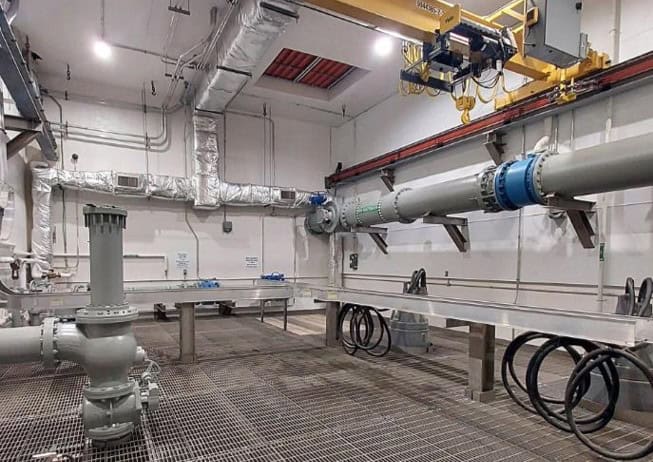
Another common issue is poor wet well design, such as flat bottoms or oversized basins that allow solids, rags, and grease to accumulate. This buildup leads to clogged pumps, foul odors, and frequent manual cleaning. Rehabilitation that prioritizes maintenance-friendly design helps utilities reduce downtime and long-term operational costs.
Transform Lift Stations into Reliable Community Assets
Effective lift station rehabilitation goes beyond replacing old components. It involves re-engineering for greater reliability, modernizing technology, improving safety, and preparing for future growth. By addressing critical issues such as aging infrastructure, outdated controls, flow variability, odor, and maintenance inefficiencies, municipalities can transform lift stations from operational vulnerabilities into dependable community assets.
Rehabilitation vs. Replacement: Making the Right Decision for Your Lift Station
Deciding whether to rehabilitate or replace a lift station is one of the most important infrastructure decisions a utility can face. The choice involves balancing conditions, cost, performance, and long-term reliability. Without a structured evaluation process, utilities risk overinvesting in repairs or ignoring obsolete components or undersized infrastructure that keep O&M costs high.
At HR Green, we guide municipalities through a proven, repeatable assessment process that helps leaders make confident, data-driven decisions. A thorough condition assessment lays the groundwork for a well-informed rehabilitation or replacement strategy. Understanding and weighing key criteria, such as system age, performance data, and future capacity needs, helps determine the most effective path forward for your community.
How to Conduct a Lift Station Condition Assessment
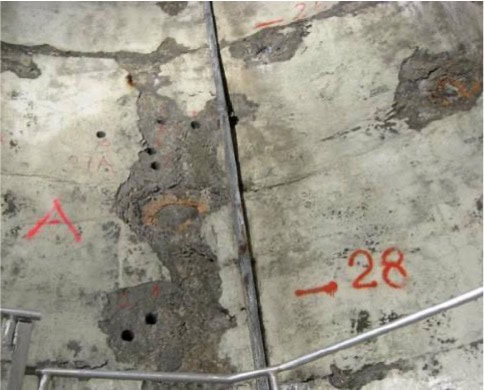
A comprehensive condition assessment is the cornerstone of effective asset management. It provides the facts needed to prioritize investments and plan for the future. When HR Green’s engineers evaluate a lift station, we examine several core categories, including structural, mechanical, electrical, HVAC, operational, and safety.
Structural Assessment
A sound structure is essential for safe operations and long-term reliability of the lift station. We review the wet well and building for cracking, corrosion, leaking joints, water intrusion, and deterioration of coatings or linings. Structural assessment also considers concrete condition, wall integrity, and any deficiencies that could impact safety, infiltration, or hydraulic performance.
Mechanical Assessment
Mechanical equipment drives station performance, so identifying wear or functional issues early helps prevent failures and costly emergency repairs. We evaluate pump health, clog frequency, vibration, noise, bearing conditions, and how pumps operate under load. Pump drawdown testing can be performed to compare actual pump performance to the original pump curves. We also review valves, piping, mixing systems, and any observed hydraulic inefficiencies.
Electrical and Controls Assessment
Reliable electrical and controls systems are critical for continuous operation and safe maintenance. We assess the age, condition, and code compliance of control panels, MCCs, SCADA components, alarms, and backup power systems. This includes verifying arc-flash labeling, surge protection, grounding, and whether the equipment can be safely accessed and maintained per modern standards.
HVAC Assessment
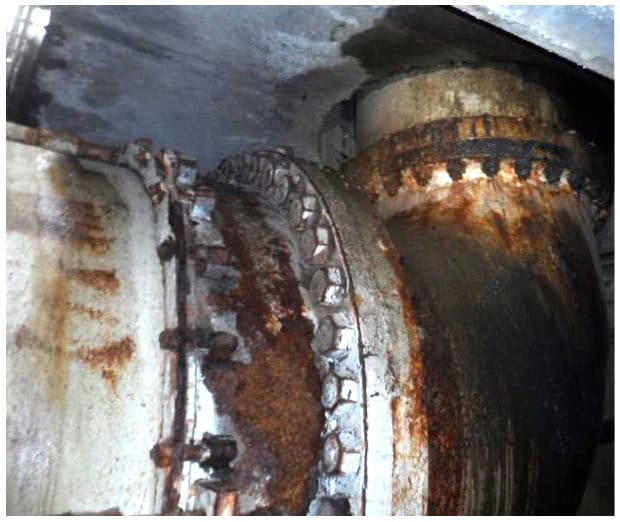
Proper ventilation and heating protect equipment and provide safe working conditions, especially in dry-pit pump rooms or control buildings. We inspect the functionality of ventilation fans, heaters, ductwork, and dehumidification. Many older stations have inadequate HVAC that fails to meet NFPA requirements, leading to moisture issues, corrosion in electrical panels, and shortened equipment life.
Operational Assessment
Understanding how the lift station performs day-to-day helps identify bottlenecks and improvements that can reduce maintenance effort. We observe operating cycles, pump sequencing, control setpoints, alarm history, and any operator workarounds. This helps reveal whether the station is meeting current flow demands and whether operational changes or equipment upgrades could improve reliability.
Safety and Site Access Assessment
Safe access is essential for routine maintenance, emergency response, and removal of pumps or equipment. We evaluate whether staff can access the station year-round, whether there is adequate space for crane trucks or bypass pumping, and whether confined-space entry points, ladders, walkways, and railings meet modern safety standards. Site circulation, lighting, and traffic considerations are reviewed. We also review site utilities such as electrical service reliability and availability of water for washdown or jetting.
Rehabilitate vs. Replace: How to Decide
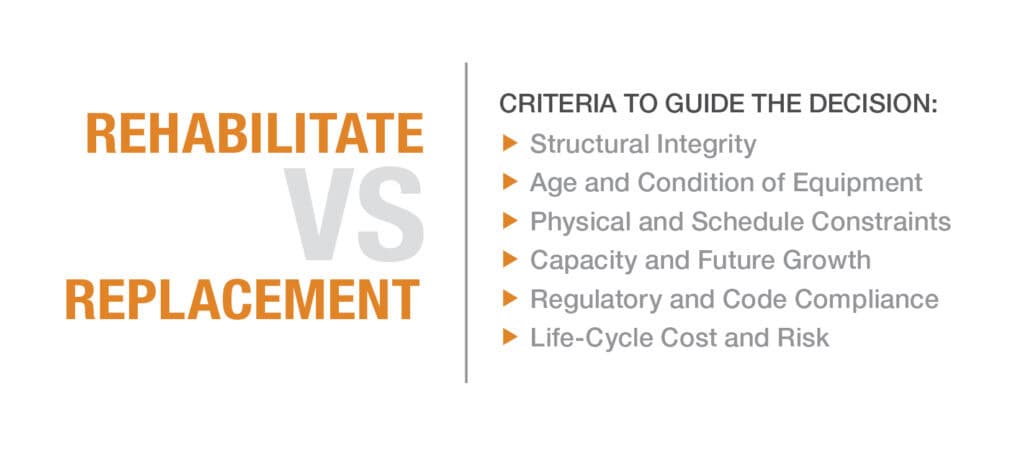
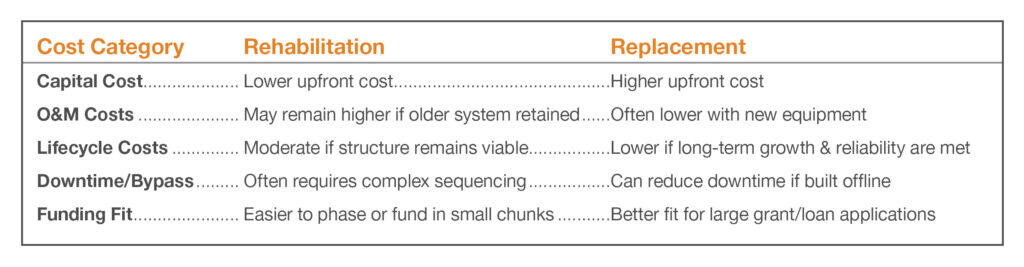
After assessment, each factor is scored and analyzed to create a defensible decision matrix. This framework compares life-cycle costs, schedule impacts, and risk exposure. The key criteria below help guide the decision.
1. Structural Integrity
If the wet well and associated lift station structural elements are structurally sound and the layout is functional, the station may be a strong candidate for rehab. But if the concrete is deteriorated beyond coating or repair, or if the station lacks space or access for modern equipment, replacement becomes the more practical solution.
2. Age and Condition of Equipment
Mechanical and electrical equipment nearing end of life, unsupported by manufacturers, or suffering chronic failures may suggest that full-scale replacement is the better value. Conversely, if the structure is solid and pumps, valves, or controls need only targeted repairs, rehabilitation can restore performance at a much lower cost.
3. Physical and Schedule Constraints
Some stations simply cannot be modified to meet modern hydraulic or spatial requirements. Undersized wet wells often lead to short-cycling, air entrainment, or poor pump hydraulics. Hydraulic Institute Standards require specific clearances and dimensions that older structures cannot always meet. If the site is too constrained to expand the wet well, add screens, or improve access, replacement is typically the only feasible option. Rehabilitation can often be completed faster and with less bypass pumping, making it preferable when operational downtime must be minimized.
4. Capacity and Future Growth
Population growth, redevelopment, and increased I&I can push older stations far beyond their intended operating range. If projected peak flows exceed what the existing station could be rehabilitated to meet, then rebuilding for higher capacity is naturally the best long-term choice.
5. Regulatory and Code Compliance
Some older lift stations cannot be brought into compliance with current codes without major structural changes. Requirements from NFPA 820, state redundancy rules, ventilation standards, flood protection criteria, and emergency power provisions can be difficult or impossible to meet in outdated or space-constrained facilities. When compliance upgrades exceed the physical limits of the existing station, replacement becomes the most practical solution.
6. Life-Cycle Cost and Risk
The final decision must balance upfront cost against long-term risk. In many cases, phased rehabilitation can extend asset life with minimal disruption. But if chronic failures, confined spaces, obsolete components, or access limitations continue to drive high O&M costs, a new station may deliver a lower total cost of ownership.
Rehabilitation vs. Replacement – Cost Considerations
How to Build a Framework for Confident Decisions
Choosing between rehabilitation and replacement is not just an engineering judgment, it is a strategic investment decision that affects reliability, safety, and budget efficiency for years to come. By using a structured condition assessment and life-cycle cost analysis, communities can make informed, defensible decisions that extend asset life and optimize resources.
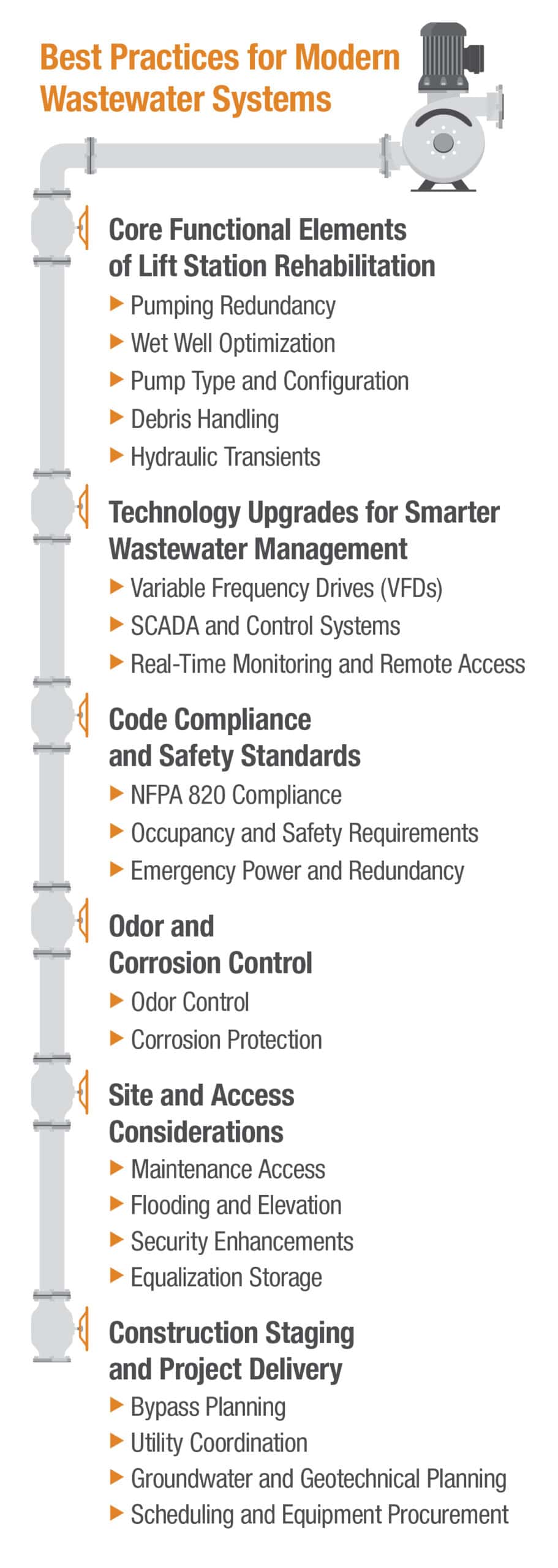
What are Best Practices for Modern Wastewater Systems
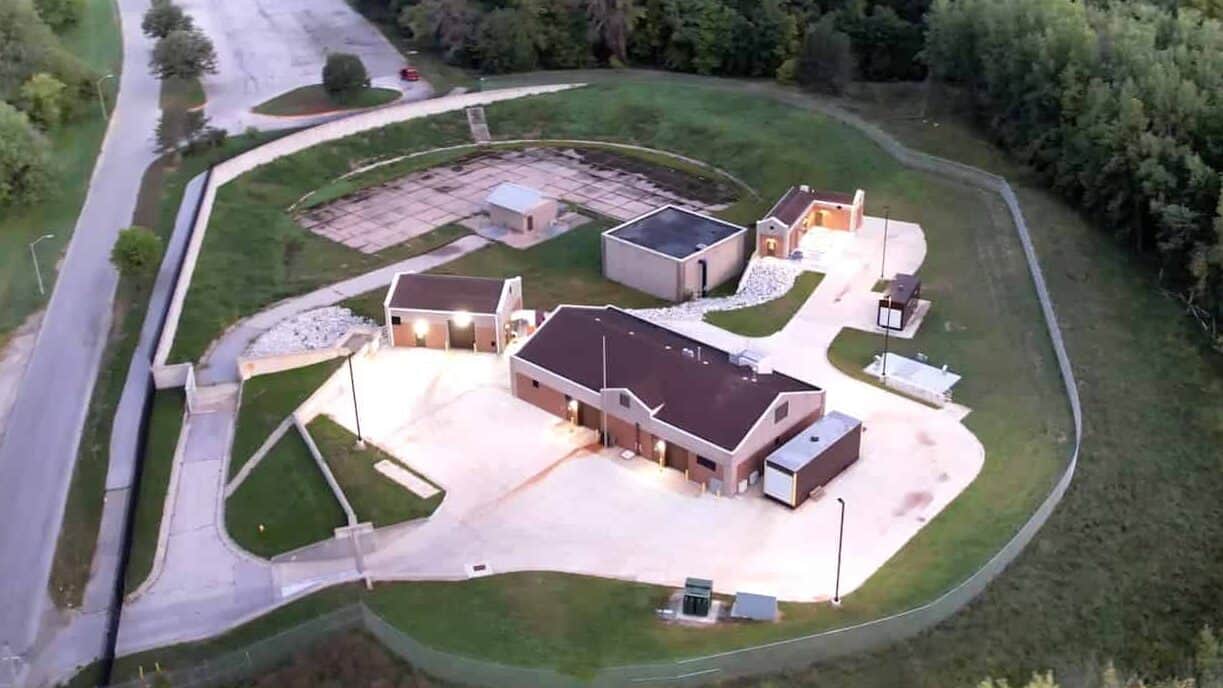
Rehabilitating a lift station is more than repairing aging equipment, it’s an opportunity to modernize a critical piece of your wastewater system. By applying proven best practices, municipalities can extend asset life, improve reliability, and enhance operator safety. Successful rehabilitation focuses on optimizing wet well hydraulics, improving pumping redundancy, upgrading controls and communication systems, and enhancing odor and corrosion protection. Modernizing pumping equipment, electrical/controls systems, and code compliance makes the station easier to maintain and positions it to remain resilient for decades to come.
Core Functional Elements of Lift Station Rehabilitation
Every successful rehabilitation begins with understanding the station’s fundamental systems. The following components form the backbone of reliable, maintainable lift station design.
Pumping Redundancy
A dependable lift station must include standby pumping capacity. This allows flow to be maintained during peak demand or when a primary pump fails. Automatic alternation of pump operation balances wear and extends equipment life. Following redundancy standards helps utilities meet reliability and regulatory expectations.
Wet Well Optimization
Older wet wells often have flat bottoms or poor geometry that allow solids and grease to accumulate. Modernizing the wet well by adding sloped floors, benching, and inflow orientation improves self-cleaning, reduces clogging, and minimizes manual maintenance.
Pump Type and Configuration
Choosing the right pump type is essential. For areas with high rag or debris content, chopper or screw centrifugal pumps are preferred. In flood-prone areas, submersible-rated motors and controls provide protection if the dry well floods. Matching pump style and materials to site conditions supports long-term reliability.
Debris Handling
Debris management is a critical part of lift station design. Large municipal systems or combined sewer areas may require mechanical bar screens or comminutors to remove or break down solids. Smaller stations can benefit from non-clog impeller or chopper pumps that pass solids without frequent clogging. The right approach depends on sewer characteristics, debris load, and available maintenance staff.
Hydraulic Transients
Rapid pump starts, valve closures, or flow surges can create water hammer that damages force mains and pump assemblies. Designing for hydraulic transients with surge tanks, relief valves, and air/vacuum valves helps protect the system and extend equipment life.
Technology Upgrades for Smarter Wastewater Management
Technology is often the most transformative aspect of a rehabilitation project. Upgrading controls and automation can drastically improve energy efficiency, operator visibility, and emergency response.
Variable Frequency Drives (VFDs)
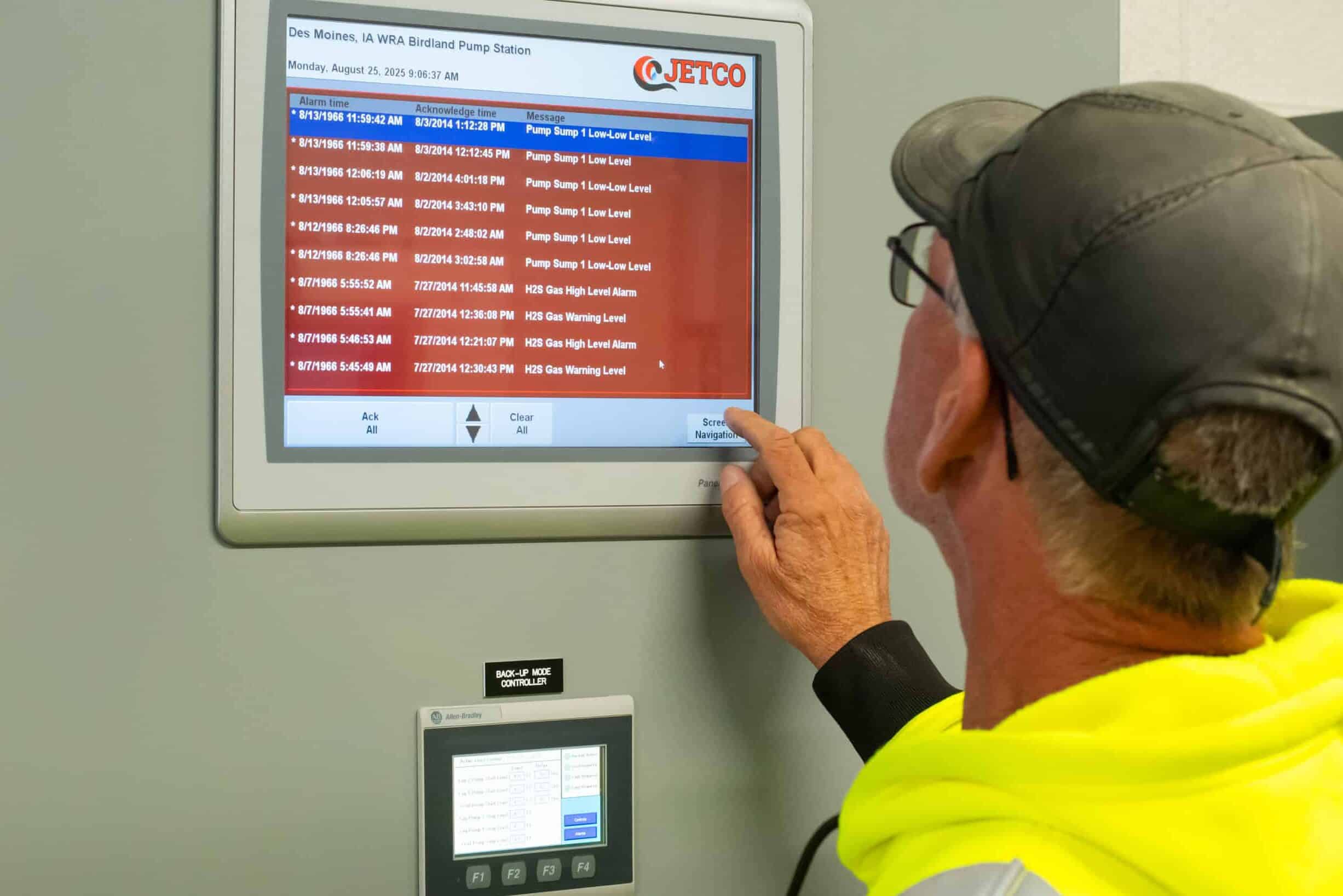
VFDs adjust pump speed based on flow or level conditions, reducing on/off cycling, saving energy, and lowering electrical demand charges. They also reduce mechanical stress, improving motor longevity.
SCADA and Control Systems
Many older stations still rely on outdated relay-based panels. Replacing them with PLC-based control systems and adding touchscreen interfaces (HMIs) allows real-time control, data logging, and automation. SCADA integration provides centralized monitoring and early warning alarms for performance issues.
Real-Time Monitoring and Remote Access
Modern lift stations can now be monitored remotely using cloud-based dashboards or mobile apps. Operators can review performance trends, receive instant alerts, and detect anomalies before failures occur. This proactive approach helps utilities prevent downtime and reduce maintenance costs.
AI-Driven Predictive Maintenance and Analytics
The use of AI-driven analytics is emerging as a best practice in lift station rehabilitation. By synthesizing historical and real-time sensor data (e.g. pump cycles, wet well levels, vibration, and energy draw), machine learning models can detect anomalies that precede equipment wear, clogging, or electrical issues. These predictive insights enable utilities to schedule maintenance tasks based on condition rather than fixed intervals, reducing downtime and unplanned repairs. This approach also supports energy optimization by adjusting control strategies based on predicted flow patterns. AI algorithms can help utilities cut energy costs while improving reliability, effectively turning raw SCADA data into actionable operational intelligence.
Code Compliance and Safety Standards
Even when compliance is not the main driver of a rehabilitation project, it quickly becomes a necessary part of the scope. Electrical, mechanical, and structural improvements often trigger new safety and code requirements.
NFPA 820 Compliance
The National Fire Protection Association (NFPA) 820 standard defines hazardous classifications for wastewater facilities. Wet wells and valve vaults often fall under Class I, Division 1 or 2, depending on ventilation rates. When these areas are upgraded, explosion-proof lighting, sealed conduit, and purge-rated equipment may be required to maintain compliance.
Occupancy and Safety Requirements
The Ten States Standards define ventilation requirements and occupancy ratings. For example, a below-grade dry well can be classified as non-hazardous if adequate continuous ventilation is provided. Proper ventilation can reduce or eliminate hazardous classifications, simplifying facilities and avoiding the need for costly gas detection systems and explosion-proof ratings.
Emergency Power and Redundancy
Reliable backup power is essential for maintaining operation during utility outages. Permanent generators, transfer switches, or portable connection points help utilities comply with state redundancy standards and maintain service continuity.
Odor and Corrosion Control
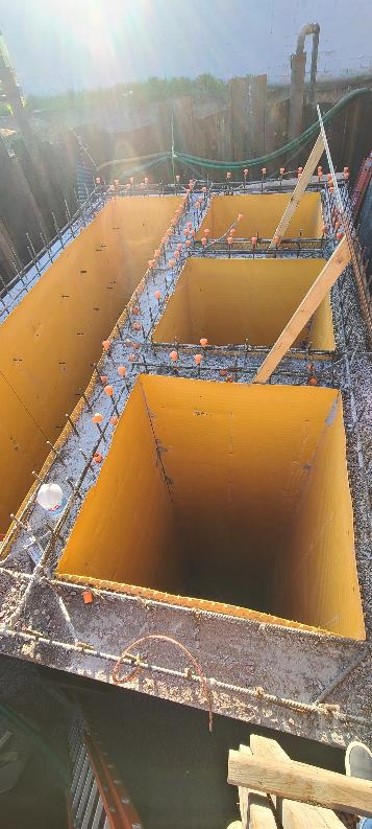
Odor and corrosion are two of the most common long-term challenges in wastewater lift stations. Rehabilitation provides the perfect opportunity to address both.
Odor Control
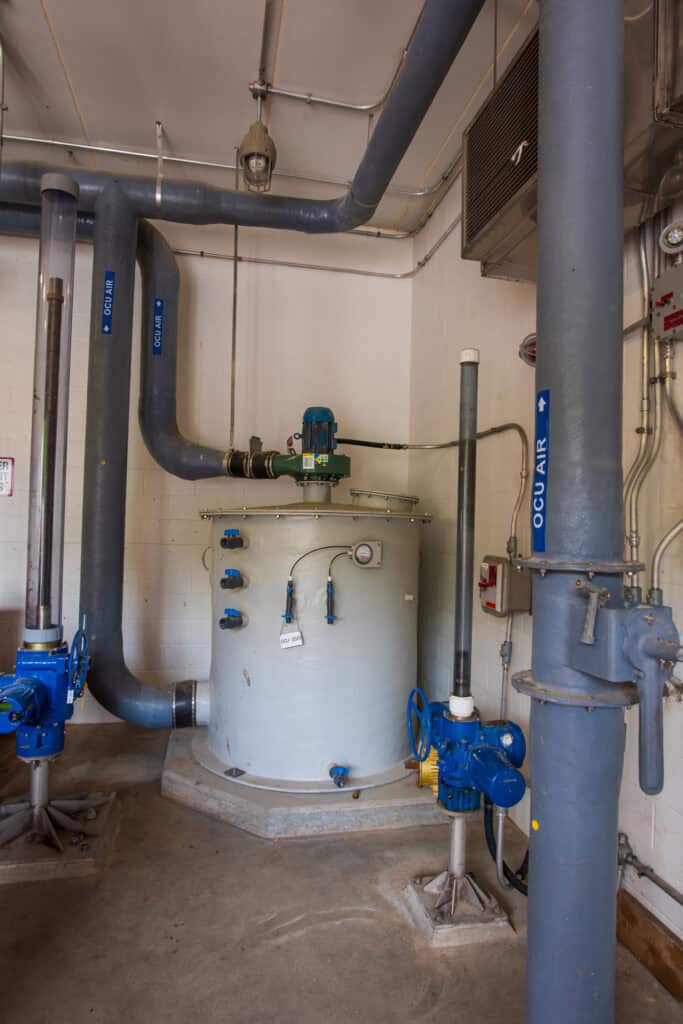
For smaller stations, activated carbon filters connected to vent systems offer cost-effective odor mitigation. Larger or high-flow systems may require biofilters or chemical dosing systems that treat hydrogen sulfide (H₂S) upstream. Adding nitrate or iron-based compounds in long force mains can prevent anaerobic conditions and eliminate odors at the source.
Corrosion Protection
Long-term exposure to H₂S can degrade concrete, steel, and ductile iron. Rehabilitation projects should include epoxy coatings, PVC or HDPE liner panels, and stainless-steel materials to protect against corrosion. This extends equipment and structure life and reduces the need for frequent replacement or repairs.
Site and Access Considerations
Good engineering design also considers how operators interact with the site. Accessibility and site layout often determine how successful a rehabilitation will be over the long term.
Maintenance Access
Make sure there is adequate space for crane trucks, vactor trucks, and maintenance equipment. Adding reinforced access surfaces, safe hatches, and clear vehicle paths allows staff to perform maintenance safely and efficiently.
Flooding and Elevation
In flood-prone areas, elevate control panels, standby generators, and electrical equipment above the flood protection elevation. Proper site grading, drainage, and elevation planning can prevent service disruptions and reduce future repair costs.
Security Enhancements
Lift stations in public or remote areas benefit from fencing, tamper-proof hatches, and security cameras. Access control systems help utilities monitor activity and protect valuable assets.
Equalization Storage
Where site space allows, equalization basins can help attenuate peak flows and reduce pump starts during storms. Equalization also smooths flow to downstream treatment plants, improving process stability and extending infrastructure life.
Construction Staging and Project Delivery
Construction staging is one of the most complex parts of lift station rehabilitation. It requires balancing live flow management, safety, and tight schedules while maintaining continuous operation.
Bypass Planning
Determine early whether the lift station can be staged with partial pumping capacity or isolation of wet wells or if a full bypass system is required. Bypass systems must be sized for peak flows and designed with redundancy to handle unexpected conditions.
Utility Coordination
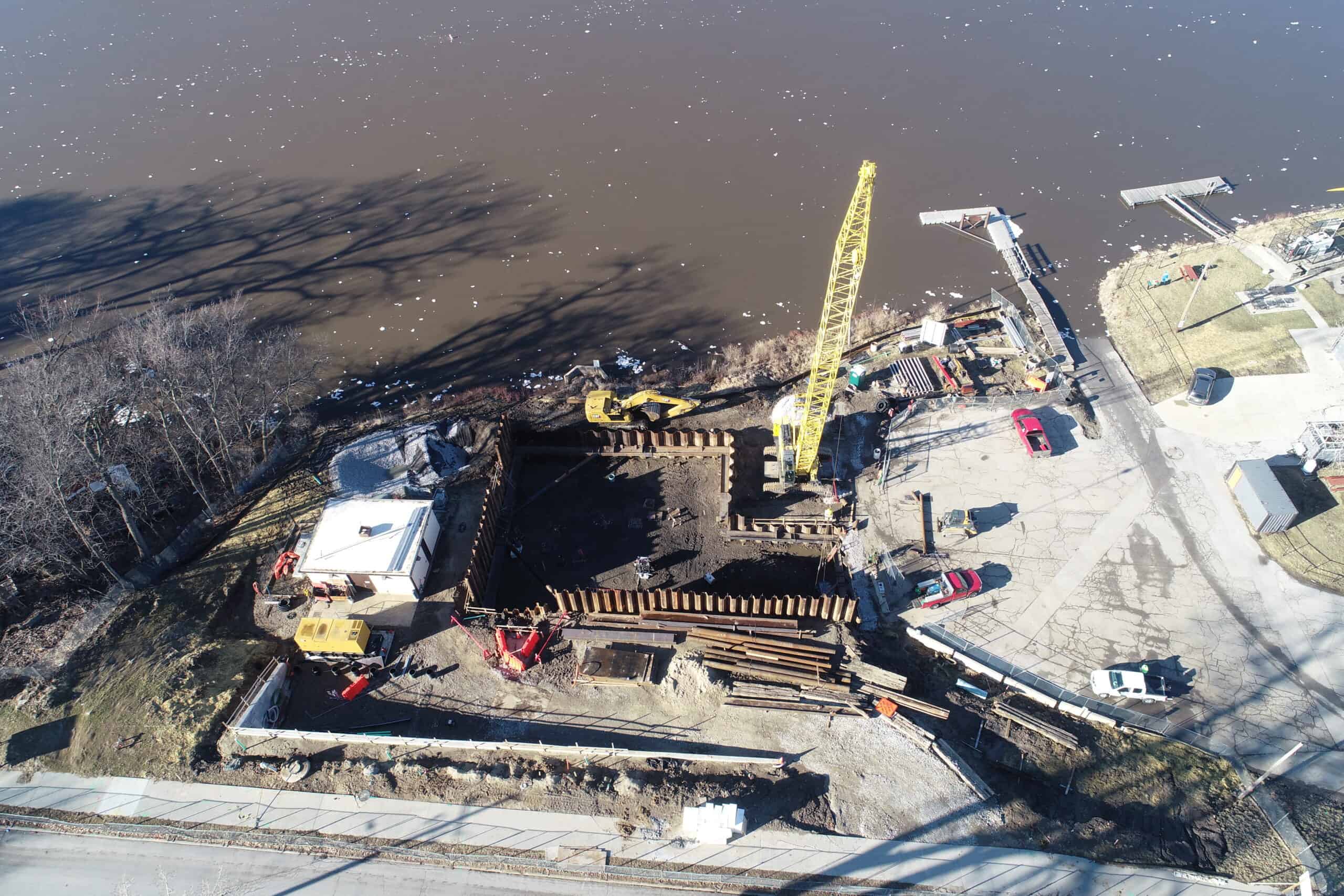
Older lift stations are often surrounded by water mains, fiber lines, gas pipes, and electric service. Early utility mapping, potholing, and coordination with utility companies help prevent costly conflicts during construction.
Groundwater and Geotechnical Planning
Many lift stations are in low-lying areas with shallow water tables or soft soil. The project may need to plan for dewatering wells or wellpoints, damproofing treatments, and sometimes full sheeting or shoring if excavation depth or groundwater is significant.
Scheduling and Equipment Procurement
Staging areas should include space for cranes, bypass piping, and equipment storage. Ordering custom pumps, MCCs, and control panels early in the process prevents delays and supports timely project delivery.
Strategic Lift Station Rehabilitation for Long-Term Efficiency
Municipalities face increasing pressure to modernize their wastewater infrastructure while managing costs, adhering to regulations, and meeting community expectations. Lift station rehabilitation provides a powerful way to extend asset life, reduce maintenance costs, and enhance performance when executed strategically.
By following best practices in pump redundancy, wet well design, control upgrades, odor management, and site planning, utilities can transform aging lift stations into efficient, reliable systems ready to serve into the next generation.
At HR Green, our wastewater engineering experts help communities across the country evaluate existing infrastructure, plan cost-effective rehabilitation programs, and implement modern, code-compliant solutions. With the right design and execution, lift station rehabilitation not only fixes immediate issues but also strengthens the foundation for sustainable, resilient wastewater systems for decades to come.
Contact HR Green today to learn more!