
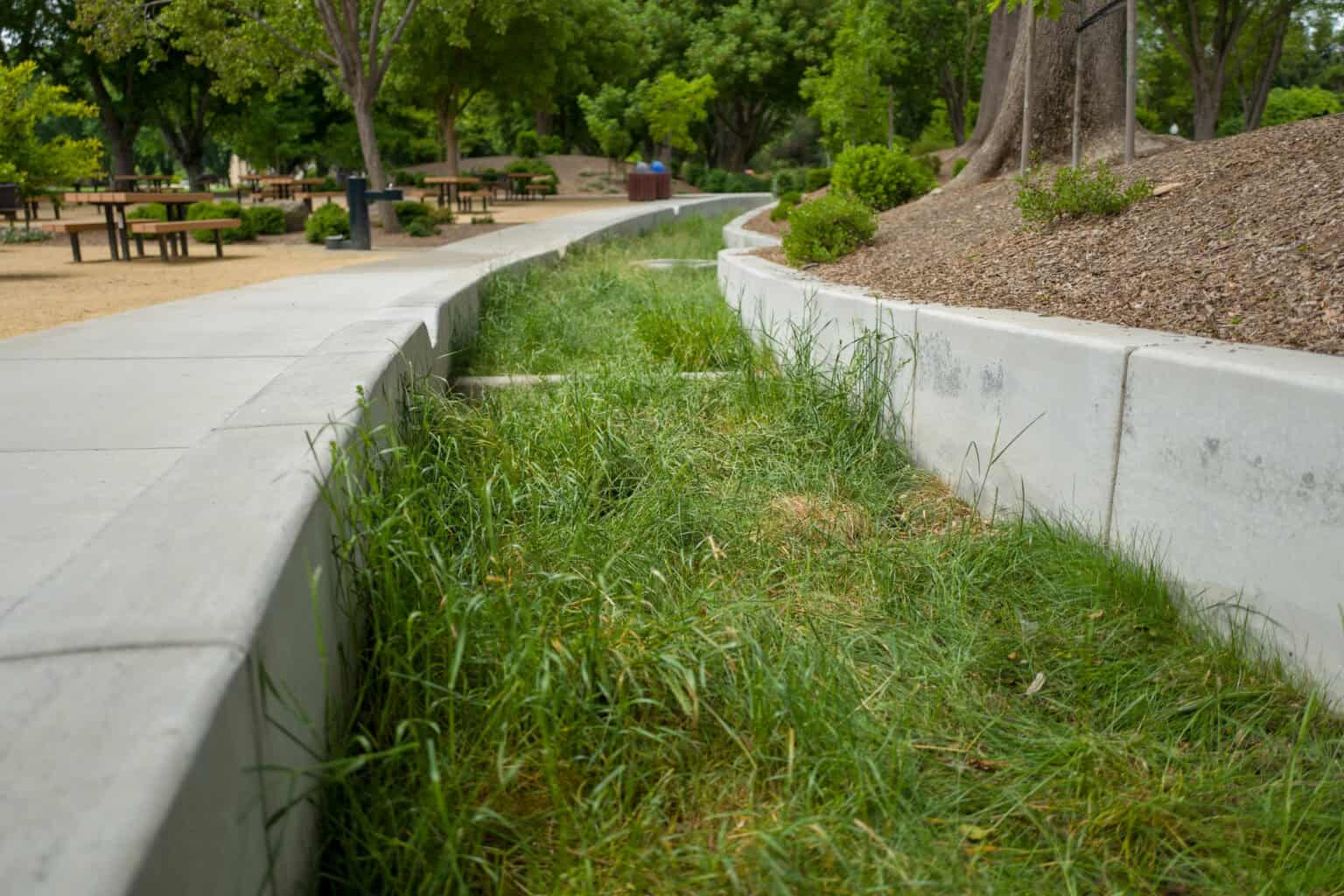
Flooding in older neighborhoods can feel like a puzzle with no clear solution. Residents often ask a very reasonable question: Why is it so difficult to fix flooding in long-established communities? The truth is a mix of engineering realities, historical development patterns, and simple math. To understand the challenge, it helps to look back at how—and when—these neighborhoods were originally built.
A Quick History Lesson: How We Got Here
The major population centers in Texas followed similar development patterns through the 20th century: rapid growth, concentrated development, and then outward expansion. Much of that development happened before modern floodplain regulations and detention mitigation requirements existed.
Houston is a prime example. The city was already heavily built out before floodplain regulations were adopted and detention became a standard requirement for new development. As a result, many of the most densely developed areas today were constructed without the storage and conveyance systems we now rely on to manage stormwater.
Flood history data supports what engineers and residents have observed for years: structural flooding occurs more frequently in mature areas that were built before detention requirements and floodplain regulations were in place. Channel and detention data in the Houston/Harris County region points to the same conclusion—older areas that flood more often are also the areas with the largest deficits in detention capacity and open channel length relative to the amount of development that occurred over the last 40-50 years.
In plain terms, the places with the least room to build stormwater solutions are often the places that need them most.
Why Mitigation is Harder in Mature, Fully Developed Areas
Most flood mitigation strategies aim to do two things:
- Improve conveyance (move water through the system more efficiently), and
- Remove runoff that’s temporarily stored in streets and neighborhoods during heavy rain events.
But removing that “stored” runoff creates a new problem. If you speed up drainage and push more flow downstream without replacing the displaced storage, you can unintentionally shift flooding from one neighborhood to another. That’s why effective mitigation almost always requires a defined detention storage area to offset the water you’re moving out of streets and low points.
And then comes the second challenge: getting the water from the flooding location to the storage area. In a fully developed area, where land is scarce and utilities are dense, that can be the hardest part of all.
So, when traditional detention isn’t feasible, communities and engineers must get creative.
Creative Detention Approaches That Can Make a Difference
Below are examples of detention-focused strategies being used in mature parts of Houston, solutions that adapt to tight footprints, high land values, and limited right-of-way.
Pumped Detention: Creating More Storage Without More Land
Many detention basins are designed as gravity-drained systems and are limited by how deep they can be excavated while still draining naturally. Pumped detention increases storage by deepening a basin and pumping the volume below the elevation that allows gravity drainage. Depending on site conditions, deepening can add 50% to 100% more volume without expanding the footprint.
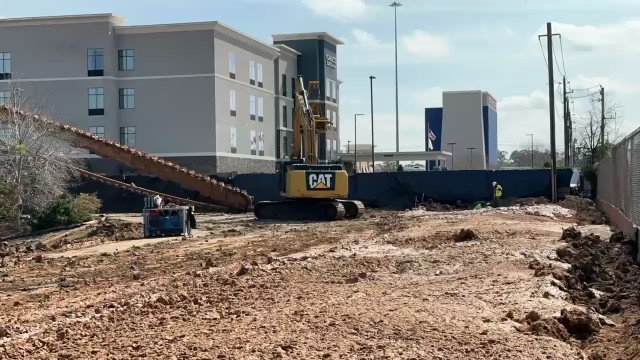
This approach can be cost-effective when expanding existing basins because it often avoids land acquisition, one of the biggest cost drivers in mature areas. However, there are tradeoffs. Pump construction and lifecycle costs can be significant. And because many gravity basins sit just above the groundwater table, deepening below groundwater elevation can draw down the water table and raise concerns like differential settling around nearby structures.
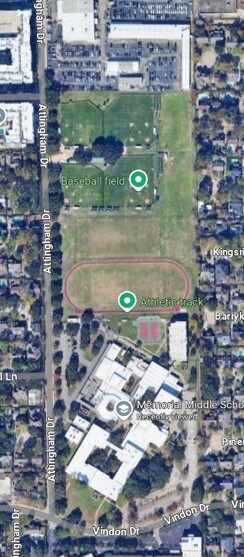
On one west Houston basin expansion, HR Green addressed groundwater impacts by designing and constructing an impermeable bentonite wall around the basin perimeter to isolate the basin from groundwater. It increased construction cost, but the cost per acre-foot of added storage was justified because the project avoided additional right-of-way and there were few other options available to serve the flood-prone community.
Underground Detention: Storage Where No Open Land Exists
In mature communities, land values are often high and open tracts are scarce. In some cases, flood damage reduction benefits can justify underground detention, especially when surface land has to remain in use.
HR Green is currently designing a solution that captures and conveys cascading runoff to a proposed underground detention site beneath a middle school sports field. After construction, the field will be rebuilt on top of a concrete vault. The vault is also being designed to accommodate the future reconstruction of a three-story school building above it, functioning as a component of the future foundation system.
The estimated construction cost for the overall mitigation solution, including the underground vault, is approximately $77 million. The flood mitigation benefits, which are driven by the area’s high land and improvement values, are estimated to generate $80 to $100 million in project benefit.
Repurposing Developed Land: Turning Liabilities into Flood Storage
Sometimes, the best opportunity for detention comes from land that’s already developed but no longer serving the community well.
HR Green is currently engaged on a project involving the purchase of an abandoned apartment complex in a mature region of Houston with significant flood mitigation needs and limited land availability. The approach is straightforward and impactful: remove an uninhabited, underperforming property and replace it with detention infrastructure that reduces risk for surrounding neighborhoods.
Buyout Utilization: Converting Repetitive-Loss Areas Into Regional Detention
Buyouts remain a viable tool for areas built in the floodplain, often prior to floodplain regulations. In some cases, agencies can maximize the long-term value of buyouts by repurposing acquired properties as regional detention and stormwater features.
One example is the Lauder Stormwater Detention Basin, a successful buyout-to-detention project that demonstrates how voluntary property acquisition can create space for large-scale mitigation where few other options exist.
Parks, Inline Storage, and Smarter Timing
Creative detention doesn’t stop with basins. Other approaches include:
- Dual-purpose park space is designed to temporarily store stormwater during extreme events while maintaining its primary recreational use.
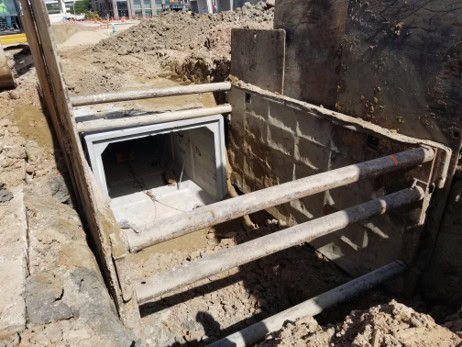
- Inline storage such as oversized reinforced concrete boxes beneath roadways—already common for meeting mitigation requirements.
- Preserving storage for peak timing by isolating inline detention systems and feeding them through elevated equalizer/control structures, keeping volume available closer to the peak of a storm event. This can function similarly to a side weir for an offline detention basin and improve system performance when it matters most.

The Bottom Line
Creative detention solutions typically cost more per acre-foot of storage than traditional basins. But in many mature communities, traditional detention simply isn’t available. When land is constrained and flooding risk is high, the additional cost can be justified, especially where benefits include avoided damages, improved public safety, and long-term neighborhood resilience.
As flood mitigation programs advance across Texas, many of the “easy” solutions have already been implemented. What’s left are the complex areas where infrastructure, development, and risk overlap, often in the very neighborhoods built long before modern standards.
That reality puts a responsibility on the engineering community: think beyond standard approaches, collaborate openly with stakeholders, and bring practical creativity to the table. Because in fully developed urban areas, creative detention isn’t a nice-to-have—it’s often the path forward.
Connect with HR Green’s water resources team to evaluate creative detention options grounded in hydraulic modeling and practical constructability for urban conditions.